
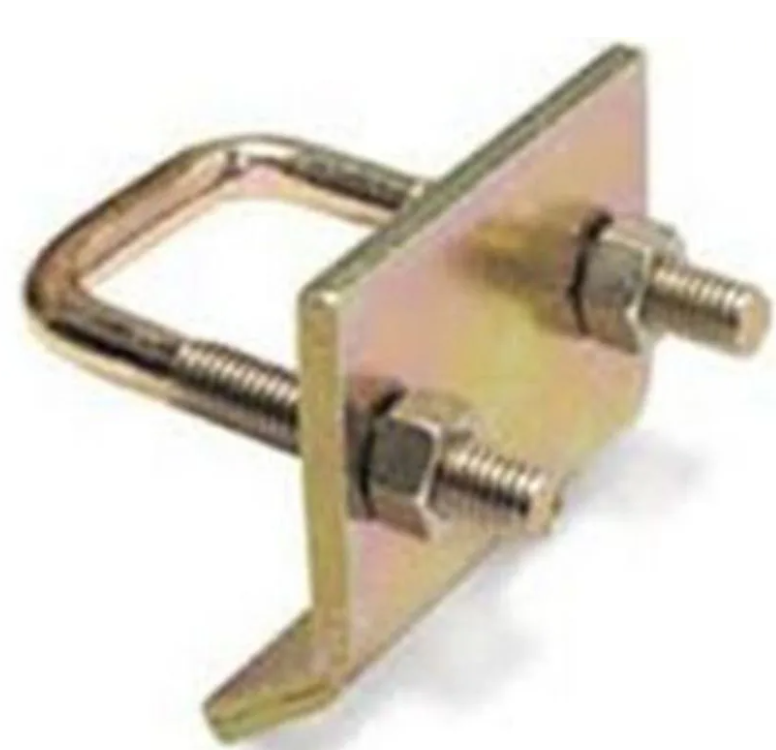
Kindorf E-760-2
- Kindorf Beam Clamp, 3/4 in Flange Thickness, 2200 lb, Right Angle Under Flange Channel Position, For Use With: B-900, B-905, B-906 and B-907 Series Structural Channel, Steel, Galv-Krom/Standard, 3-1/4 in L x 3 in W
Master the Art of Secure Installation with America’s Most Trusted Clamping Solution
Picture this: you’re standing in the basement of a bustling hospital, surrounded by a maze of pipes, conduits, and cables that snake through the ceiling like the circulatory system of a living organism. Every single one of those critical lifelines is held securely in place by small, unassuming metal components that most people never notice – yet without them, the entire infrastructure would collapse into chaos. These silent guardians are Kindorf clamps, and they represent one of the most ingenious solutions to a problem as old as construction itself: how do you hold things exactly where they need to be, reliably, for decades?
In the world of industrial construction and maintenance, where precision meets durability and where a single failure can cascade into catastrophic consequences, Kindorf clamps have earned their reputation as the gold standard. But what makes these seemingly simple devices so special? Why do engineers, contractors, and facility managers across North America swear by them? And how can understanding their capabilities transform your next project from adequate to exceptional?
The Genesis of Genius: Understanding What Kindorf Clamps Actually Do
To truly appreciate the brilliance of Kindorf clamps, we need to step back and consider the fundamental challenge they solve. In any building – whether it’s a towering skyscraper, a sprawling manufacturing facility, or a cozy residential home – there exists an intricate network of systems that must be precisely positioned and absolutely secure. Pipes carrying everything from water to steam, electrical conduits protecting vital wiring, HVAC ducts channeling climate control, and countless other components all require mounting solutions that are simultaneously strong, adjustable, and long-lasting.
Traditional mounting methods often fall short. Welding is permanent and expensive. Basic brackets lack adjustability. Temporary solutions become permanent headaches. This is where Kindorf clamps shine with their elegant simplicity and remarkable versatility.
Kindorf clamps are engineered mounting accessories designed to work seamlessly with Kindorf strut channel systems. They serve as the critical connection point between the structural support system and the components being mounted. Think of them as the joints in a skeleton – individually small, but collectively responsible for the integrity and functionality of the entire system.
The applications for Kindorf clamps span virtually every industry and installation type. In commercial buildings, they secure fire suppression piping that could save lives in an emergency. In manufacturing plants, they hold process piping that carries materials worth millions of dollars. In data centers, they support cable trays that enable our digital world. In hospitals, they mount medical gas lines that patients depend on for survival. The diversity of applications is matched only by the reliability these clamps bring to each installation.
The Installation Mastery: How Kindorf Clamps Transform Complex Tasks into Simple Solutions
Installing Kindorf clamps is where their true genius becomes apparent. Unlike many industrial components that require specialized training, complex tools, or lengthy procedures, these clamps are designed with the end user in mind. The installation process embodies the principle that the best engineering solutions are those that make difficult tasks effortless.
The process begins with proper planning and measurement. Before any physical work starts, experienced installers assess the load requirements, environmental conditions, and spacing needs. This preliminary step is crucial because while Kindorf clamps are remarkably forgiving and adjustable, starting with accurate measurements saves time and ensures optimal performance.
The actual installation typically involves sliding the clamp onto the Kindorf channel, positioning it at the desired location, and securing it in place. The beauty of this system lies in its modularity – clamps can be repositioned, adjusted, or reconfigured without damaging the channel or requiring new hardware. This flexibility is invaluable during initial installation when precise positioning is critical, and equally important years later when system modifications become necessary.
One of the most impressive aspects of Kindorf clamps is how they accommodate field adjustments. Real-world installations rarely match theoretical drawings exactly. Obstacles appear, measurements shift, and requirements change. Traditional mounting systems often require starting over when these inevitable adjustments arise. Kindorf clamps, however, can be loosened, repositioned, and retightened without compromising their holding strength or requiring additional materials.
The installation process also showcases the thoughtful engineering behind these components. The clamping mechanism is designed to distribute load evenly, preventing stress concentrations that could lead to failure. The connection to the strut channel creates a secure mechanical bond that actually strengthens under load rather than weakening. This characteristic is particularly important in applications subject to vibration, thermal cycling, or dynamic loads.
The Spectacular Spectrum: Exploring the Types of Kindorf Clamps Available
The variety of Kindorf clamps available reflects the diverse needs of modern construction and industrial applications. Each type is specifically engineered to excel in particular situations, and understanding these variations is key to selecting the optimal solution for any project.
Pipe clamps represent one of the most common categories of Kindorf clamps. These come in configurations ranging from simple single-pipe holders to complex multi-pipe assemblies. The single pipe clamps are marvels of engineering efficiency, designed to securely hold pipes of specific diameters while allowing for thermal expansion and contraction. Multi-pipe clamps enable efficient organization of parallel pipe runs, reducing installation time and creating cleaner, more maintainable installations.
Conduit clamps form another crucial category, specifically designed for electrical installations. These Kindorf clamps accommodate various conduit types and sizes, from small instrument wiring to large power cables. They often feature specialized designs that prevent galvanic corrosion when used with different metals, and some include provisions for bonding and grounding requirements specific to electrical installations.
Beam clamps represent a more specialized category of Kindorf clamps, designed to attach strut channel systems to existing structural elements. These clamps can grip I-beams, C-channels, and other structural shapes, providing secure mounting points without requiring welding or drilling. This capability is invaluable in retrofit applications or when mounting to existing structures where permanent modifications are undesirable or prohibited.
Universal clamps showcase the ultimate versatility of the Kindorf clamps concept. These adjustable units can accommodate a wide range of pipe sizes, conduit dimensions, or custom configurations. While they may not offer the absolute optimization of dedicated single-purpose clamps, their flexibility makes them ideal for maintenance departments, small projects, or applications where the exact requirements may change over time.
Specialty clamps round out the product line, addressing unique applications that standard clamps cannot handle effectively. These might include clamps designed for extreme temperatures, corrosive environments, high-vibration applications, or unusual pipe configurations. The existence of these specialized options demonstrates the depth of engineering expertise behind the Kindorf clamps brand and their commitment to solving real-world challenges.
The Quest for Quality: Where to Source Kindorf Clamps
Finding reliable sources for Kindorf clamps is crucial for project success, but it’s not simply a matter of finding the lowest price. The quality of both the products and the supplier relationship can significantly impact project outcomes, long-term reliability, and overall satisfaction.
Industrial supply distributors represent the primary channel for Kindorf clamps. These companies specialize in serving contractors, facility managers, and engineers with the technical expertise and inventory depth needed for professional applications. The best distributors don’t just sell clamps – they provide application support, technical guidance, and problem-solving assistance that can be invaluable during complex installations.
Electrical supply houses form another important distribution channel, particularly for projects involving conduit and cable management systems. These suppliers understand the unique requirements of electrical installations and often stock specialized versions of Kindorf clamps designed specifically for electrical applications. They can provide guidance on code compliance, grounding requirements, and integration with other electrical system components.
Mechanical contractors’ suppliers focus on HVAC, plumbing, and process piping applications. They typically stock the pipe clamp variations of Kindorf clamps and understand the thermal, pressure, and installation requirements specific to mechanical systems. Their expertise can be particularly valuable for complex piping layouts or systems with unusual operating conditions.
Direct manufacturer relationships become important for large projects or ongoing maintenance programs. While individual purchases may go through distributors, establishing relationships with manufacturer representatives can provide access to technical support, custom solutions, and advance notice of new products or improvements.
The rise of online procurement has added another dimension to sourcing Kindorf clamps. While online purchasing offers convenience and competitive pricing, it’s important to verify that suppliers are authorized distributors selling genuine products. The reputation and reliability that make Kindorf clamps valuable can only be maintained through proper distribution channels and authentic products.
The Flexibility Factor: Understanding Kindorf Clamps Adjustability
The adjustability of Kindorf clamps represents one of their most valuable characteristics, but it’s also one of the most misunderstood. This adjustability isn’t simply about fitting different sizes – it’s about accommodating the dynamic nature of real-world installations and the changing requirements that occur throughout a system’s lifecycle.
Position adjustability is perhaps the most obvious form of flexibility. Kindorf clamps can be positioned anywhere along a strut channel and repositioned as needed without damage to the channel or clamp. This capability is invaluable during initial installation when precise positioning is critical for proper fit and function. It’s equally important during maintenance when access requirements or system modifications necessitate moving mounted components.
Size adjustability varies by clamp type but is present in many configurations. Pipe clamps often accommodate a range of pipe diameters, allowing a single clamp design to serve multiple applications. This reduces inventory requirements and simplifies specification for projects involving mixed pipe sizes. Universal clamps take this concept even further, adjusting to accommodate dramatically different pipe sizes or even different component types entirely.
Angular adjustability addresses the reality that pipes and conduits don’t always run perfectly parallel to mounting surfaces or strut channels. Many Kindorf clamps incorporate features that allow the mounted component to be angled relative to the mounting channel. This capability is crucial for routing around obstacles, accommodating building geometry, or achieving optimal flow characteristics in piping systems.
Load distribution adjustability is a more subtle but equally important characteristic. Quality Kindorf clamps are designed so that tightening the clamp optimizes the load distribution across the mounting interface. This ensures maximum holding strength while minimizing stress concentrations that could lead to failure over time.
The key to maximizing the benefits of Kindorf clamps adjustability is understanding that it’s designed to accommodate real-world conditions rather than replace proper planning and measurement. While these clamps are remarkably forgiving, they perform best when used within their intended ranges and applications.
Material Mastery: The Substance Behind Kindorf Clamps Strength
The materials used in manufacturing Kindorf clamps reflect a sophisticated understanding of metallurgy, corrosion science, and mechanical engineering. These aren’t simply pieces of bent metal – they’re precision-engineered components where material selection directly impacts performance, longevity, and reliability.
Steel forms the foundation for most Kindorf clamps, but not just any steel. The specific alloys used are selected for their combination of strength, formability, and compatibility with various finishing processes. The steel must be strong enough to withstand significant clamping forces without deformation, yet formable enough to be shaped into the complex geometries required for effective clamping action.
Hot-dip galvanizing represents the most common protective finish for Kindorf clamps, and this process exemplifies the attention to detail that distinguishes quality products. The galvanizing process involves immersing the finished clamps in molten zinc, creating a metallurgically bonded coating that provides both barrier and sacrificial protection against corrosion. The zinc coating is not simply applied to the surface – it actually alloys with the underlying steel to create multiple layers of zinc-steel compounds that are harder and more durable than either material alone.
The thickness and uniformity of the galvanized coating on Kindorf clamps are carefully controlled to meet stringent industry standards. This isn’t simply about appearance – coating thickness directly affects corrosion resistance and service life. Quality manufacturers subject their galvanized clamps to salt spray testing and other accelerated corrosion tests to verify that the protective coating will perform as expected in real-world environments.
Stainless steel versions of Kindorf clamps address applications where even greater corrosion resistance is required. These are typically specified for food processing facilities, chemical plants, marine environments, or other locations where galvanized steel might not provide adequate protection. The stainless steel used is typically 316 grade, which offers excellent resistance to chloride corrosion and other aggressive chemicals.
The mechanical properties of the materials used in Kindorf clamps are carefully balanced to provide optimal performance. The clamps must be strong enough to develop full clamping force without yielding, yet not so hard that they become brittle or difficult to machine. The threading used for adjustment mechanisms must be precise enough for smooth operation while being robust enough to withstand repeated adjustments and high clamping loads.
Quality control in material selection extends beyond the clamps themselves to include fasteners, springs, and other components. All materials are selected to be compatible with each other to prevent galvanic corrosion and ensure long-term reliability. This attention to material compatibility is particularly important in environments where moisture, temperature cycling, or chemical exposure could accelerate corrosion processes.
Pipe Security Perfected: How Kindorf Clamps Master Secure Pipe Holding
The ability of Kindorf Clamps to hold pipes securely represents one of their most critical applications, and understanding this capability requires examining both the mechanical principles involved and the real-world conditions these installations must withstand. Pipe holding isn’t simply about preventing movement – it’s about managing complex loads, accommodating thermal effects, and maintaining system integrity under all operating conditions.
The mechanical design of pipe-holding Kindorf clamps incorporates principles of load distribution that maximize holding power while minimizing stress concentrations on the pipe itself. The contact surfaces are carefully shaped to spread clamping forces over the maximum practical area, preventing the localized stress that could damage the pipe or create leak-prone conditions. This is particularly important with softer piping materials like copper or plastic, where excessive point loading could cause deformation or failure.
Thermal considerations play a crucial role in pipe-holding applications. Pipes carrying hot or cold fluids undergo significant thermal expansion and contraction, creating forces that can be substantial in long pipe runs. Kindorf clamps address this challenge through designs that allow controlled movement while maintaining secure support. Some clamps incorporate features that permit axial movement while preventing lateral or vertical displacement, allowing the pipe to expand and contract naturally without creating excessive stress.
Vibration control represents another crucial aspect of secure pipe holding. Pumps, compressors, and flowing fluids can create vibrations that, if not properly controlled, can lead to fatigue failures, joint loosening, or noise problems. Kindorf clamps help control these vibrations through their rigid connection to the strut channel system and their secure grip on the pipe. The mass and stiffness of the overall mounting system help dampen vibrations and prevent resonance conditions that could amplify problems.
Load capacity calculations for pipe-holding applications must consider not just the static weight of the pipe and its contents, but also dynamic loads from pressure surges, thermal expansion, and operational transients. Kindorf clamps are designed with safety factors that account for these additional loads, ensuring reliable performance even under upset conditions.
The secure holding capability of Kindorf clamps extends beyond simple mechanical attachment to include considerations of long-term reliability. The clamping mechanism is designed to maintain secure contact even as components age, settle, or experience minor dimensional changes. This reliability is crucial in applications where pipe failure could have serious consequences, such as fire suppression systems, medical gas lines, or process piping containing hazardous materials.
Installation techniques for pipe-holding applications require attention to proper spacing, support intervals, and clamping torque. Kindorf clamps are designed to provide clear guidance on these parameters, ensuring that installers can achieve optimal performance without requiring extensive specialized knowledge. The goal is to make secure pipe installation achievable for skilled tradespeople while maintaining the high performance standards required for critical applications.
Precision Engineering: Understanding Kindorf Clamps Dimensions
The dimensional specifications of Kindorf clamps reflect a sophisticated understanding of manufacturing tolerances, assembly requirements, and performance optimization. These aren’t arbitrary measurements – every dimension has been carefully chosen to maximize functionality while ensuring compatibility across the entire Kindorf system ecosystem.
The basic dimensional framework for Kindorf clamps starts with their relationship to the strut channel system. The mounting portions of the clamps are precisely dimensioned to fit the standard channel profiles, with clearances calculated to ensure smooth installation while maintaining secure engagement. These critical dimensions are held to tight tolerances during manufacturing to ensure consistent fit and performance across different production runs and suppliers.
Pipe clamp dimensions are typically specified in terms of the nominal pipe size they accommodate, but understanding the actual dimensional relationships is more complex. Kindorf clamps are designed to work with the actual outside diameters of common pipe types, which don’t always correspond directly to nominal sizes. For example, a clamp specified for 2-inch pipe must accommodate the actual outside diameter of 2-inch schedule 40 steel pipe, which is 2.375 inches, not 2.000 inches.
The dimensional design of Kindorf clamps also considers the wall thickness variations common in different pipe types and schedules. A well-designed clamp will accommodate the range of outside diameters encountered in practice, providing secure clamping for both thin-wall and heavy-wall pipes of the same nominal size. This flexibility is achieved through careful design of the clamping surfaces and adjustment mechanisms.
Clearance dimensions are equally important, particularly in congested installations where multiple pipes or conduits must be routed in close proximity. Kindorf clamps are designed with compact profiles that minimize the space required while still providing full functionality. The dimensional envelope occupied by an installed clamp includes not just the clamp itself but also the space required for installation tools and future maintenance access.
Thread specifications for adjustable Kindorf clamps follow industry standards to ensure compatibility with standard tools and replacement parts. The thread pitch and form are selected to provide smooth adjustment operation while maintaining high clamping loads. The length of threaded engagement is calculated to develop the full strength of the threaded components without requiring excessive adjustment travel.
Quality control procedures for dimensional accuracy are rigorous, involving both incoming material inspection and finished product verification. Critical dimensions are checked using precision measuring equipment, and statistical process control techniques are employed to ensure that dimensional variations remain within acceptable limits. This attention to dimensional accuracy ensures that Kindorf clamps will perform consistently and reliably in the field.
System Compatibility: How Kindorf Clamps Integrate Seamlessly
The compatibility of Kindorf clamps with Kindorf channel systems represents one of the most carefully engineered aspects of the entire product line. This compatibility isn’t accidental – it’s the result of systematic design coordination that ensures every component works optimally with every other component in the system.
The foundation of this compatibility lies in the standardized dimensional relationships between clamps and channels. Kindorf clamps are designed to engage with the specific slot geometry and overall dimensions of Kindorf strut channels. The engagement mechanism provides both mechanical security and optimal load transfer, ensuring that the full strength of both components can be utilized effectively.
Load compatibility is another crucial aspect of system integration. Kindorf clamps are designed to develop their full rated capacity when used with appropriately sized and supported channel systems. The load ratings published for clamps assume proper installation on adequately supported channels, and the system is designed so that properly selected components will work together optimally.
Finish compatibility ensures that galvanized Kindorf clamps work seamlessly with galvanized channels without creating galvanic corrosion concerns. Similarly, stainless steel clamps are designed to be used with stainless steel channels where ultimate corrosion resistance is required. This finish coordination extends the service life of the entire installation and eliminates potential failure modes that could occur with incompatible material combinations.
The modular nature of the Kindorf system means that Kindorf clamps must be compatible not just with basic channels but also with the wide range of accessories, fittings, and specialized components in the product line. This includes angle brackets, splice plates, end caps, and other system components that might be used in complex installations.
Installation tool compatibility ensures that standard tools can be used effectively with all Kindorf clamps and channel combinations. The hex head sizes, thread pitches, and access requirements are coordinated across the product line so that installers don’t need specialized tools for each different component type.
Field modification compatibility addresses the reality that installations sometimes require custom solutions or field adaptations. Kindorf clamps are designed so that they can be field-modified when necessary without compromising their basic functionality or safety. This might involve drilling additional holes, cutting for clearance, or making other modifications to accommodate unique installation requirements.
Strength in Numbers: Understanding Kindorf Clamps Load Capacity
The load-bearing capacity of Kindorf clamps represents one of their most critical performance characteristics, and understanding these ratings requires examining both the testing methods used to establish them and the real-world factors that influence actual performance. Load capacity isn’t simply a single number – it’s a comprehensive performance envelope that considers multiple loading conditions and failure modes.
Static load capacity represents the most straightforward rating, indicating the maximum load that a clamp can support indefinitely under steady conditions. These ratings are established through rigorous testing that applies loads until failure occurs, with appropriate safety factors applied to determine working load limits. The testing process considers not just ultimate failure loads but also the loads at which permanent deformation or other performance degradation begins to occur.
Dynamic load considerations are equally important for many applications. Kindorf clamps used in systems subject to vibration, pressure pulsations, or operational cycling must be evaluated for fatigue resistance and dynamic amplification effects. The load capacity under dynamic conditions may be significantly different from static capacity, and proper system design must account for these differences.
Load direction significantly influences capacity ratings. Kindorf clamps typically provide different load ratings for tension, compression, and shear loading. Understanding these directional differences is crucial for proper application, as real-world loads often combine multiple directions simultaneously. The orientation of the clamp relative to the strut channel also affects load capacity, with some orientations providing higher capacity than others.
Environmental factors can influence actual load capacity in service. Temperature extremes, corrosive conditions, and aging effects can all reduce the effective capacity of Kindorf clamps over time. Conservative design practices account for these factors by applying appropriate derating factors or selecting clamps with capacities well above calculated requirements.
The load transfer mechanism between Kindorf clamps and the supporting channel system is crucial for achieving rated capacity. The channel must be adequately sized and supported to develop the full capacity of the clamps. Load capacity ratings assume proper installation and adequate supporting structure, and these conditions must be verified for each application.
Safety factors built into load capacity ratings provide margins for the uncertainties inherent in real-world applications. These factors account for variations in materials, manufacturing tolerances, installation quality, and operating conditions that could affect performance. Understanding the basis for these safety factors helps engineers make appropriate design decisions for different risk levels and applications.
Corrosion Conquest: How Kindorf Clamps Battle the Elements
Corrosion resistance in Kindorf clamps represents a critical performance characteristic that directly impacts service life, maintenance requirements, and overall system reliability. The approach to corrosion protection involves multiple strategies working together to provide comprehensive protection against the various corrosion mechanisms that can affect metal components in service.
The galvanized coating applied to most Kindorf clamps provides both barrier and sacrificial protection against corrosion. The barrier protection comes from the zinc coating physically separating the underlying steel from corrosive environments. Even more importantly, the zinc provides sacrificial protection by corroding preferentially to the steel, protecting the base metal even if the coating is scratched or damaged.
The hot-dip galvanizing process used for Kindorf clamps creates a metallurgically bonded coating that is far superior to simple zinc plating or painting. The molten zinc bath creates multiple layers of zinc-steel alloy compounds that are actually harder and more durable than either zinc or steel alone. This creates a robust coating system that can withstand mechanical handling and field installation without compromising corrosion protection.
Coating thickness on galvanized Kindorf clamps is carefully controlled to provide optimal corrosion protection while maintaining dimensional accuracy and finish quality. The thickness is verified through testing to ensure compliance with industry standards such as ASTM A153, which specifies minimum coating weights for different steel thicknesses and geometries.
Environmental compatibility is a key consideration in corrosion resistance design. Kindorf clamps are tested under various environmental conditions to verify their corrosion resistance performance. Salt spray testing simulates marine environments, while other tests evaluate performance in industrial atmospheres, rural environments, and other specific conditions.
The design of Kindorf clamps minimizes corrosion-prone features such as crevices, sharp edges, and areas where water or contaminants could accumulate. Drainage features are incorporated where possible to prevent water retention, and surface treatments are optimized to promote good coating adhesion and coverage.
Galvanic compatibility with other system components is carefully considered to prevent accelerated corrosion that could occur when dissimilar metals are in contact in the presence of moisture. Kindorf clamps are designed to be compatible with standard galvanized strut channel systems and common pipe materials without creating galvanic corrosion concerns.
For applications requiring enhanced corrosion resistance, stainless steel versions of Kindorf clamps are available. These are typically specified for food processing, chemical processing, marine applications, or other environments where galvanized steel might not provide adequate protection. The stainless steel grades used are selected for their specific corrosion resistance properties and compatibility with the intended service environment.
Electrical Excellence: Kindorf Clamps in Conduit Applications
The use of Kindorf clamps in electrical conduit installations represents one of their most demanding applications, requiring compliance with strict electrical codes while maintaining the mechanical performance characteristics needed for reliable conduit support. This application showcases the versatility and engineering sophistication of the Kindorf system.
Electrical code compliance is a fundamental requirement for conduit clamps, and Kindorf clamps designed for electrical applications are engineered to meet or exceed all relevant codes and standards. This includes requirements for conductor support intervals, grounding and bonding provisions, and compatibility with different conduit types and installation methods.
The mechanical design of conduit-specific Kindorf clamps addresses the unique requirements of electrical installations. Conduit systems often involve long, straight runs with specific support spacing requirements, and the clamps must provide secure support without interfering with conductor installation or creating stress concentrations that could damage the conduit.
Grounding and bonding considerations are crucial in electrical applications. Kindorf clamps used in electrical systems often include provisions for equipment grounding connections, ensuring electrical continuity throughout the installation. The galvanized finish provides an excellent conductive path while also providing corrosion protection.
Conduit expansion and contraction due to temperature changes must be accommodated in electrical installations, particularly in outdoor applications or areas subject to significant temperature variations. Kindorf clamps designed for electrical use often include features that allow controlled movement while maintaining secure support and electrical continuity.
The variety of conduit types used in electrical installations requires corresponding variety in Kindorf clamps designs. Rigid metal conduit, intermediate metal conduit, electrical metallic tubing, and various non-metallic conduit types all have different dimensional and support requirements. Specialized clamps are available for each major conduit type, ensuring optimal performance and code compliance.
Installation efficiency is particularly important in electrical work, where labor costs are often the dominant project expense. Kindorf clamps for electrical applications are designed for quick, simple installation that minimizes labor time while ensuring reliable performance. This includes features like snap-in mounting, pre-positioned hardware, and clear installation instructions.
Competitive Analysis: How Kindorf Clamps Stack Up Against Alternatives
Understanding how Kindorf clamps compare to alternative mounting solutions provides valuable insight into their strengths and appropriate applications. This comparison isn’t simply about identifying the “best” product – it’s about understanding which solution provides the optimal combination of performance, cost, and suitability for specific applications.
Traditional welded supports represent the most basic alternative to Kindorf clamps, and while welding can provide very high strength connections, it comes with significant disadvantages. Welded supports are permanent, making system modifications difficult and expensive. They require skilled labor and hot work permits, adding time and cost to installations. Perhaps most importantly, welded connections cannot accommodate the adjustability and flexibility that modern installations often require.
Threaded rod and generic clamp assemblies offer another common alternative, typically at lower initial cost than Kindorf clamps. However, this cost advantage often disappears when installation time and long-term reliability are considered. Generic clamps may not provide the precise fit, adjustment range, or load capacity of engineered solutions like Kindorf clamps, leading to field problems and callbacks.
Proprietary mounting systems from other manufacturers each have their own advantages and limitations. Some systems may offer specific features that make them optimal for particular applications, while others may provide cost advantages in certain situations. Kindorf clamps distinguish themselves through their combination of versatility, reliability, and broad product range that can address most mounting challenges within a single system.
The modular nature of the Kindorf system provides advantages that go beyond individual clamp performance. The ability to mix and match components, make field modifications, and accommodate future changes provides value that’s difficult to quantify but very real in practice. This flexibility often makes Kindorf clamps the more economical choice when total lifecycle costs are considered.
Quality and consistency represent major differentiators for Kindorf clamps. While lower-cost alternatives might perform adequately in some applications, the rigorous quality control and consistent performance of Kindorf clamps provide reliability that’s crucial for critical applications. The peace of mind that comes from using proven, reliable components has value that extends beyond simple cost comparisons.
Technical support and application assistance availability varies significantly among mounting system providers. Kindorf clamps benefit from extensive technical resources, application guides, and engineering support that can be invaluable for complex installations or unusual applications. This support can reduce design time, prevent field problems, and ensure optimal system performance.
Weather Warriors: Kindorf Clamps Performance in Outdoor Applications
Outdoor applications present some of the most challenging conditions for any mounting hardware, and Kindorf clamps used in these environments must withstand temperature extremes, moisture, UV exposure, and other environmental stresses while maintaining full performance capability. The design and manufacturing of outdoor-rated Kindorf clamps reflects a deep understanding of these challenges.
Temperature cycling represents one of the most significant stresses in outdoor applications. Daily and seasonal temperature variations create thermal expansion and contraction that can loosen connections, create stress concentrations, and accelerate wear. Kindorf clamps for outdoor use are designed with materials and geometries that accommodate these thermal effects without compromising their holding capability.
Moisture protection goes beyond simple corrosion resistance to include considerations of ice formation, humidity variations, and water infiltration. The design of outdoor Kindorf clamps minimizes areas where water can accumulate and freeze, potentially creating destructive expansion forces. Drainage features and material selection help ensure that moisture doesn’t compromise performance even in extreme conditions.
UV resistance is crucial for outdoor applications, particularly for any polymer components or protective coatings. While the metallic construction of most Kindorf clamps provides inherent UV resistance, any gaskets, insulators, or protective coatings must be specifically selected for outdoor service. This ensures that all components maintain their properties throughout the expected service life.
Wind loading creates dynamic stresses that indoor installations rarely experience. Kindorf clamps used in outdoor applications must be evaluated for their ability to withstand wind-induced vibrations and loading without loosening or failing. The secure connection between clamp and channel, combined with the inherent damping of the system, helps control wind-induced responses.
Salt air and industrial pollutants can create particularly aggressive corrosive environments in outdoor applications. Kindorf clamps for these environments may require enhanced protective coatings or specialized materials to provide adequate service life. The selection of appropriate clamps for specific outdoor environments requires understanding both the local conditions and the performance characteristics of different clamp variants.
Installation considerations for outdoor Kindorf clamps include accessibility for maintenance, protection during installation, and consideration of seasonal conditions. Outdoor installations often have limited accessibility, making initial installation quality crucial since maintenance and adjustments may be difficult. This places premium on the reliability and long-term performance of the mounting hardware.
Finishing Touches: The Protective Coatings of Kindorf Clamps
The finish options available for Kindorf clamps represent more than aesthetic choices – they’re critical performance elements that determine corrosion resistance, service life, and compatibility with specific environments and applications. Understanding these finish options is essential for selecting the optimal clamps for any given application.
Hot-dip galvanizing represents the standard finish for most Kindorf clamps, providing an excellent combination of corrosion protection, durability, and cost-effectiveness. The galvanizing process involves cleaning the finished clamps to remove all contaminants, then immersing them in molten zinc at approximately 850 degrees Fahrenheit. This creates a metallurgically bonded coating that becomes an integral part of the component.
The appearance of galvanized Kindorf clamps is characteristic of the hot-dip process, with a somewhat mottled gray finish that may include spangle patterns from zinc crystallization. While this finish might not have the aesthetic appeal of painted or plated components, it provides superior durability and self-healing properties that make it ideal for industrial applications.
Plain steel finishes are available for Kindorf clamps intended for indoor applications where corrosion protection is less critical or where field painting or other protective treatments will be applied. Plain steel clamps offer cost advantages and can be field-finished as required for specific applications or aesthetic requirements.
Stainless steel construction provides the ultimate corrosion resistance for Kindorf clamps used in aggressive environments. The stainless steel used is typically 316 grade, which offers excellent resistance to chlorides and other aggressive chemicals. The natural finish of stainless steel provides both corrosion resistance and an attractive appearance suitable for architectural applications.
Special finishes for Kindorf clamps may be available for specific applications or environments. These might include specialized coatings for extreme temperature service, non-conductive coatings for electrical isolation, or colored finishes for identification or aesthetic purposes. Custom finishes are typically available for large quantity applications where standard finishes cannot meet specific requirements.
The selection of finish for Kindorf clamps must consider not just the immediate environment but also the entire service life of the installation. Environments that appear benign initially may become more aggressive over time due to operational changes, nearby construction, or atmospheric changes. Conservative finish selection often proves to be economical when long-term performance is considered.
Quality control for protective finishes involves both process control during application and testing of finished products. Coating thickness measurements, adhesion testing, and corrosion resistance evaluation ensure that finishes meet specifications and will perform as expected in service. This quality control is particularly important for protective finishes where performance directly affects service life.
Tightening Techniques: Mastering Kindorf Clamps Adjustment and Installation
The proper tightening and adjustment of Kindorf clamps is crucial for achieving optimal performance, and understanding the techniques and principles involved can mean the difference between a reliable installation and one prone to problems. This aspect of Kindorf clamps usage requires both technical knowledge and practical skill.
Torque specifications for Kindorf clamps are established through testing to ensure adequate clamping force without overstressing components. These specifications consider the strength of the threaded components, the clamping geometry, and the materials being clamped. Following recommended torque values ensures consistent, reliable performance across different installers and applications.
The sequence of tightening operations becomes important in multi-bolt clamps or installations involving multiple clamps. Generally, Kindorf clamps should be tightened gradually and evenly, with final torque applied in a specific sequence to ensure uniform load distribution. This prevents stress concentrations and ensures that all portions of the clamping interface contribute to load transfer.
Tool requirements for Kindorf clamps installation are typically minimal, usually involving standard wrenches or socket tools. However, using the correct tools is important for achieving proper torque and avoiding damage to fastener heads or other components. Torque wrenches are recommended for critical applications where precise clamping force is essential.
Adjustment procedures for Kindorf clamps allow for field modifications and fine-tuning of installations. The adjustment mechanisms are designed to allow repositioning and retightening without compromising clamp integrity. Understanding these procedures enables installers to achieve optimal fit and performance even when field conditions don’t match original plans exactly.
Over-tightening represents one of the most common installation errors with Kindorf clamps. Excessive torque can damage fastener threads, deform clamping surfaces, or even crack clamp bodies. The symptoms of over-tightening may not be immediately obvious but can lead to premature failure or reduced performance over time.
Under-tightening is equally problematic, resulting in inadequate clamping force that may allow movement, vibration, or complete failure under load. Kindorf clamps are designed to develop their full rated capacity only when properly tightened to specification, and inadequate tightening directly compromises performance.
Environmental considerations during tightening include temperature effects on materials and fasteners, the presence of lubricants or contaminants, and accessibility constraints that might affect tightening procedures. Cold temperatures can make materials more brittle, while high temperatures might affect torque readings or cause thermal expansion that influences tightening requirements.
Certification Standards: The Quality Assurance Behind Kindorf Clamps
The certifications and listings held by Kindorf clamps represent third-party validation of their performance, safety, and compliance with industry standards. These certifications provide assurance to engineers, contractors, and end users that the products will perform as specified and meet all applicable requirements.
UL listing represents one of the most important certifications for Kindorf clamps used in electrical applications. Underwriters Laboratories testing evaluates products for safety, performance, and compliance with electrical codes. UL-listed Kindorf clamps have been tested for current-carrying capacity, temperature rise, corrosion resistance, and mechanical strength as applicable to their intended use.
The UL listing process for Kindorf clamps involves comprehensive testing of representative samples, evaluation of manufacturing processes and quality control procedures, and ongoing factory inspections to ensure continued compliance. This rigorous process provides confidence that listed products will perform consistently and safely in field applications.
ANSI standards compliance ensures that Kindorf clamps meet American National Standards Institute requirements for dimensional accuracy, performance, and safety. These standards provide common baselines for product performance and facilitate interchangeability between products from different manufacturers that meet the same standards.
International standards compliance becomes important for Kindorf clamps used in global projects or applications requiring compliance with non-US standards. This might include CE marking for European applications, CSA approval for Canadian projects, or compliance with other national or international standards as required.
Quality management system certifications such as ISO 9001 demonstrate that the manufacturer maintains comprehensive quality control procedures throughout the design, manufacturing, and delivery process. These certifications provide assurance that quality is built into every aspect of Kindorf clamps production, not just inspected at the end.
Testing and certification for specific applications may be required for Kindorf clamps used in specialized environments. This might include seismic certification for earthquake-prone areas, fire resistance testing for life safety applications, or specialized testing for nuclear, aerospace, or other high-reliability applications.
The documentation and traceability that accompany certified Kindorf clamps provide important information for system design, installation, and maintenance. This documentation typically includes performance data, installation instructions, and certification statements that may be required for project approvals or regulatory compliance.
Tool Time: Essential Equipment for Kindorf Clamps Installation
The tools required for Kindorf clamps installation reflect the practical, user-friendly design philosophy behind the entire Kindorf system. While specialized tools can enhance efficiency and precision, most Kindorf clamps can be installed using common hand tools found in any well-equipped toolbox.
Standard wrenches represent the most basic tool requirement for Kindorf clamps installation. The hex head sizes used are typically standard sizes that match common wrench sets, eliminating the need for specialized tools. Both open-end and box-end wrenches work effectively, with box-end wrenches providing better grip and reduced risk of fastener damage.
Socket tools often provide faster and more convenient installation than wrenches, particularly in applications involving multiple clamps or restricted access situations. The socket sizes correspond to standard wrench sizes, and both manual and powered socket tools can be used effectively depending on the application requirements and installer preferences.
Torque wrenches become important for applications where precise clamping force is critical for performance or safety. While many Kindorf clamps installations rely on feel and experience for proper tightening, torque wrenches provide objective measurement that can be particularly valuable for critical applications or when training new installers.
Power tools can significantly speed installation of Kindorf clamps in large installations, but they must be used carefully to avoid over-tightening or component damage. Impact wrenches should generally be avoided unless specifically recommended, as the sudden application of high torque can damage fasteners or clamp components.
Measuring tools including rulers, calipers, and gauges help ensure proper spacing and positioning of Kindorf clamps during installation. While the adjustability of the system provides some tolerance for measurement errors, accurate initial positioning reduces installation time and ensures optimal performance.
Cutting and drilling tools may be required for field modifications or custom installations. Standard metal-cutting tools work effectively with Kindorf clamps, and the materials and finishes are compatible with normal metalworking practices. However, field modifications should be approached carefully to avoid compromising performance or safety.
Safety equipment appropriate for the installation environment is always required when working with Kindorf clamps. This includes personal protective equipment such as safety glasses and gloves, as well as fall protection equipment for elevated installations. The specific safety requirements depend on the installation location and applicable safety regulations.
Real-World Applications: Where Kindorf Clamps Shine
The diversity of applications for Kindorf clamps demonstrates their versatility and reliability across virtually every industry and building type. Understanding these applications provides insight into the capabilities of the system and inspiration for new uses.
Commercial building applications represent a major market for Kindorf clamps, where they support everything from fire sprinkler systems to electrical conduit to HVAC ductwork. The flexibility and reliability of the system make it ideal for the complex, multi-trade installations common in modern commercial construction. The ability to accommodate changes and additions throughout the building’s lifecycle provides ongoing value long after initial construction.
Industrial facilities present some of the most demanding applications for Kindorf clamps, with requirements for chemical resistance, high temperatures, vibration tolerance, and extreme reliability. Manufacturing plants, refineries, power generation facilities, and other industrial installations rely on Kindorf clamps to support critical process piping, electrical systems, and other infrastructure components.
Healthcare facilities require mounting systems that combine reliability with compatibility with stringent cleaning and disinfection procedures. Kindorf clamps used in hospitals must support medical gas lines, electrical systems, and other critical infrastructure while maintaining their integrity under repeated exposure to cleaning chemicals and disinfectants.
Data centers and telecommunications facilities depend on Kindorf clamps to support the cable management systems that enable our connected world. The precision and reliability required in these applications demand mounting hardware that can maintain exact positioning while accommodating the frequent changes and additions common in technology environments.
Educational facilities from elementary schools to universities utilize Kindorf clamps in applications ranging from basic utility support to specialized laboratory and research installations. The safety and reliability of the system are particularly important in environments where students and researchers depend on the infrastructure for their activities.
Transportation infrastructure including airports, transit systems, and highway facilities relies on Kindorf clamps for applications that must withstand environmental extremes, vibration, and the demanding service requirements of public infrastructure. The durability and low maintenance requirements of the system provide particular value in these applications.
Residential applications, while less common, include custom homes, apartment buildings, and specialty residential installations where the flexibility and quality of Kindorf clamps provide advantages over traditional mounting methods. These applications often involve unique requirements that benefit from the adjustability and versatility of the system.
Size Matters: The Complete Range of Kindorf Clamps Dimensions
The comprehensive size range of Kindorf clamps reflects the diverse requirements of modern construction and industrial applications. This variety ensures that optimal solutions are available for everything from small instrument lines to large process piping, from residential wiring to industrial power distribution.
Small diameter Kindorf clamps serve applications involving instrument tubing, small electrical conduit, and other precision installations where space is limited and loads are relatively light. These clamps maintain the same engineering principles and quality standards as larger units while being optimized for their specific size range and applications.
Medium size Kindorf clamps cover the most common applications in commercial and light industrial installations. This size range includes clamps for standard plumbing and HVAC piping, typical electrical conduit installations, and general-purpose mounting applications. The broad selection within this size range ensures optimal solutions for the majority of installations.
Large diameter Kindorf clamps address heavy-duty applications involving major process piping, large electrical conduit, and other substantial infrastructure components. These clamps are engineered to handle the increased loads and more demanding service requirements associated with larger installations while maintaining the adjustability and reliability that characterize the entire product line.
Custom sizing options may be available for applications that fall outside the standard product range or require unique configurations. The manufacturing capabilities that produce standard Kindorf clamps can often be adapted to create custom solutions for specialized applications, providing the benefits of the Kindorf system even in unusual situations.
The sizing philosophy behind Kindorf clamps emphasizes providing optimal solutions rather than simply covering a size range. Each size is engineered specifically for its intended applications, with appropriate materials, load capacities, and features. This approach ensures that users get the best possible performance regardless of the size requirements of their application.
Sizing selection guidance helps users choose the appropriate Kindorf clamps for their specific applications. This guidance considers not just the nominal size of components being mounted but also factors such as insulation thickness, load requirements, adjustment needs, and environmental conditions that might influence the optimal clamp selection.
The standardization of sizes across the Kindorf clamps product line facilitates inventory management and simplifies specification for projects involving multiple clamp types. Common fastener sizes, similar adjustment ranges, and coordinated dimensional relationships reduce complexity and improve efficiency for both distributors and end users.
The Future is Bright: Why Kindorf Clamps Remain the Industry Standard
As we look toward the future of construction and industrial infrastructure, Kindorf clamps continue to represent the gold standard for mounting solutions. Their combination of engineering excellence, proven reliability, and adaptable design positions them perfectly to meet the evolving needs of modern construction and industry.
The increasing complexity of building systems drives demand for mounting solutions that can accommodate multiple trades, changing requirements, and future modifications. Kindorf clamps excel in these applications through their modular design, comprehensive product range, and inherent flexibility. As buildings become smarter and more integrated, the mounting systems that support their infrastructure must be equally sophisticated and reliable.
Sustainability considerations are becoming increasingly important in construction and industrial applications, favoring products like Kindorf clamps that offer long service life, minimal maintenance requirements, and potential for reuse or reconfiguration. The durability and adjustability of these clamps align perfectly with sustainable design principles that emphasize lifecycle value over initial cost.
Quality and reliability remain paramount in critical applications, and Kindorf clamps have built their reputation on consistent performance across millions of installations. This track record provides confidence for engineers and contractors facing increasingly demanding performance requirements and reduced tolerance for failures.
The Kindorf clamps system continues to evolve and improve, incorporating new materials, enhanced designs, and expanded capabilities while maintaining compatibility with existing installations. This commitment to continuous improvement ensures that the system will continue to meet future challenges while protecting existing investments.
In conclusion, Kindorf clamps represent more than just mounting hardware – they embody a systematic approach to solving infrastructure support challenges with engineering excellence, proven reliability, and user-focused design. Whether you’re designing a new facility, maintaining existing systems, or tackling unique mounting challenges, Kindorf clamps provide the foundation for solutions that will perform reliably for decades to come. Their combination of strength, flexibility, and time-tested performance makes them not just a product choice, but an investment in the long-term success of your project.