
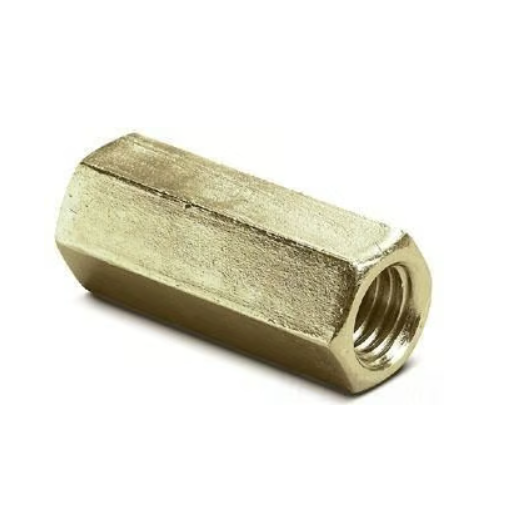
Kindorf® H-195-1/2 Rod Coupling, 1/2-13 Tapered Thread, 1-1/4 in L Coupling, Steel, Galv-Krom®
- Threads tapered to lock rods in place
- Made of steel that provides protection against corrosion
Discover how these ingenious mechanical marvels are revolutionizing structural connections in industrial and commercial projects worldwide
In the vast orchestra of modern construction, where steel beams dance with concrete and electrical systems weave through mechanical assemblies like intricate neural networks, there exists a humble yet absolutely crucial component that often goes unnoticed. Enter the Kindorf coupling – a mechanical marvel that has quietly revolutionized how we connect, support, and secure the very infrastructure that powers our daily lives.
Picture this: you’re walking through a massive manufacturing facility, your eyes drawn upward to the complex web of electrical conduits, pneumatic lines, and support structures that snake across the ceiling like metallic vines. What you’re witnessing is a testament to human ingenuity, and at the heart of many of these connections lies the unsung hero of structural engineering – the Kindorf coupling system.
But what exactly makes these couplings so special? Why have they become the go-to solution for engineers, electricians, and construction professionals across the globe? The answer lies in their elegant simplicity, remarkable versatility, and the ingenious way they solve one of construction’s most persistent challenges: creating strong, reliable connections that can be installed quickly and modified easily.
Understanding the Essence: What is a Kindorf Coupling Used For?
The Kindorf coupling serves as the vital link in the chain of structural support systems, functioning as a connector that joins Kindorf channels (also known as strut channels) together in both straight-line and angular configurations. Think of it as the mechanical equivalent of a universal joint – a device that allows two separate pieces of infrastructure to become one cohesive, load-bearing system.
These couplings find their purpose in countless applications where traditional welding or permanent fastening methods would be impractical, expensive, or simply impossible. In electrical installations, they enable the seamless connection of conduit support systems that might need to navigate around obstacles, change direction, or extend across significant distances. In mechanical systems, they provide the flexibility to create custom mounting solutions for heavy equipment, HVAC ductwork, and piping systems.
The beauty of Kindorf couplings lies not just in their functionality, but in their ability to transform rigid metal channels into a flexible, modular construction system. They bridge the gap between permanent and temporary installations, offering the strength of welded connections with the adaptability of mechanical fasteners.
The Mechanical Marvel: How Does a Kindorf Coupling Work?
To truly appreciate the genius of Kindorf coupling design, we need to delve into the mechanical principles that make these devices so effective. At its core, a Kindorf coupling operates on the fundamental principle of compression and grip – much like how a skilled climber’s hands instinctively tighten around a rope when supporting their full body weight.
The typical coupling consists of two primary components: the coupling body and the clamping mechanism. The coupling body is precision-engineered to fit snugly within the channel opening of Kindorf strut, creating an initial mechanical connection. But the real magic happens when the clamping mechanism is engaged.
As the coupling is tightened, internal components create expanding pressure against the inner walls of the channel. This expansion generates friction forces that distribute the load across multiple contact points, creating a connection that can rival welded joints in strength while maintaining the flexibility of a mechanical connection. It’s this principle of distributed load that allows Kindorf couplings to handle significant structural loads without compromising the integrity of the channel material.
The clamping action also creates what engineers call “positive retention” – meaning that once properly installed, the coupling actually becomes stronger under load, as the forces trying to separate the connection actually increase the clamping pressure. This self-reinforcing characteristic is what makes these couplings so reliable in dynamic environments where vibration and thermal expansion might cause other connection methods to fail.
Installation Mastery: How Do You Install a Kindorf Coupling?
Installing a Kindorf coupling is where engineering elegance meets practical simplicity. The process has been refined over decades to minimize installation time while maximizing connection reliability. Here’s how the magic happens in real-world applications.
The installation begins with proper preparation of the Kindorf channels. Unlike welding, which requires extensive surface preparation and safety equipment, coupling installation requires only basic hand tools and attention to detail. The channels should be cut to the desired length using appropriate cutting tools, with burrs removed to ensure smooth insertion.
The coupling is then inserted into the first channel, typically pushed in until it’s centered within the channel opening. This initial positioning is critical – too shallow and the connection won’t achieve full strength; too deep and the coupling may not engage properly with the second channel. Professional installers often develop an intuitive feel for this positioning after working with hundreds of connections.
Next comes the alignment phase, where the second channel is brought into position. This is where the Kindorf coupling system shows its true versatility. Unlike rigid welded connections, the coupling allows for slight misalignment during installation, automatically centering itself as the connection is tightened. This forgiveness factor is invaluable in field conditions where perfect measurement and positioning aren’t always achievable.
The final step involves tightening the coupling mechanism. Modern Kindorf couplings typically use either hex head bolts or specialized tightening screws that can be operated with standard tools. The tightening process should be done gradually and evenly, allowing the coupling to properly seat and distribute clamping forces. Over-tightening can damage the channel material, while under-tightening may result in connection failure under load.
Professional installers often use torque specifications provided by the manufacturer to ensure consistent connection strength across large installations. This standardization is particularly important in applications where connections must meet specific load requirements or building code standards.
The Material Science Behind Excellence: What Materials are Kindorf Couplings Made Of?
The materials used in Kindorf coupling construction represent a careful balance of strength, corrosion resistance, cost-effectiveness, and manufacturability. The most common material is carbon steel, chosen for its excellent strength-to-weight ratio and ability to handle the high clamping forces required for secure connections.
Carbon steel couplings undergo various surface treatments to enhance their performance characteristics. Hot-dip galvanizing is perhaps the most popular finish, providing excellent corrosion protection through a metallurgical bond between the steel substrate and zinc coating. This galvanized finish not only protects against rust and corrosion but also provides a distinctive silvery appearance that’s become synonymous with quality construction hardware.
For applications requiring enhanced corrosion resistance, Kindorf couplings are also available in stainless steel variants. Grade 304 stainless steel is commonly used for indoor applications where aesthetic appearance and moderate corrosion resistance are important. For more demanding environments, such as coastal installations or chemical processing facilities, Grade 316 stainless steel couplings provide superior resistance to chloride corrosion and other aggressive chemicals.
Some specialized applications require couplings made from exotic materials. Aluminum couplings offer weight savings in applications where structural loads are moderate and weight reduction is critical. These are particularly popular in aerospace ground support equipment and portable staging systems where crews must frequently move and reconfigure installations.
The internal components of Kindorf couplings, particularly the clamping mechanisms, often utilize hardened steel or specialized alloys to resist wear and deformation under repeated loading cycles. These components undergo heat treatment processes that optimize their mechanical properties for the specific stresses they’ll encounter in service.
Exploring the Universe: What Types of Kindorf Couplings Are Available?
The world of Kindorf couplings is surprisingly diverse, with specialized variants designed to address specific installation challenges and performance requirements. Understanding these different types is crucial for selecting the optimal coupling for any given application.
Straight couplings represent the most common type, designed to join two channels in a linear configuration. These workhorses of the coupling world are used in countless applications where the goal is simply to extend the length of a channel run. Despite their apparent simplicity, straight couplings are available in various configurations to accommodate different channel sizes and load requirements.
Angle couplings introduce the fascinating world of directional changes in channel systems. These specialized Kindorf couplings allow channels to be joined at predetermined angles, typically 30, 45, or 90 degrees. The engineering challenge in angle couplings lies in maintaining connection strength while accommodating the geometric complexity of angled joints. The internal geometry of these couplings is carefully designed to distribute loads evenly across the connection interface, preventing stress concentrations that could lead to premature failure.
Swivel couplings represent perhaps the most sophisticated members of the coupling family. These ingenious devices allow for rotational adjustment after installation, providing unprecedented flexibility in system design and modification. The internal mechanism typically involves precision-machined bearing surfaces that permit smooth rotation while maintaining structural integrity. This capability is invaluable in applications where system modifications are common or where precise angular alignment is critical.
Reducing couplings address the common challenge of connecting channels of different sizes. These adapters incorporate stepped internal geometries that accommodate the size difference while maintaining full load transfer capability. The design challenges in reducing couplings are significant, as they must provide full clamping force on both channel sizes despite the geometric mismatch.
Specialty couplings have evolved to address unique application requirements. Vibration-dampening couplings incorporate elastomeric elements to isolate connected structures from transmitted vibrations. High-temperature couplings utilize specialized materials and coatings to maintain performance in extreme thermal environments. Rapid-release couplings incorporate quick-disconnect mechanisms for applications requiring frequent assembly and disassembly.
Dimensional Precision: What are the Dimensions of a Standard Kindorf Coupling?
The dimensional specifications of Kindorf couplings reflect decades of refinement and standardization within the construction industry. Understanding these dimensions is crucial for proper system design and ensures compatibility across different manufacturers and applications.
Standard straight couplings typically measure between 3 to 6 inches in overall length, depending on the channel size they’re designed to accommodate. This length represents a carefully optimized balance between connection strength and material efficiency. Shorter couplings might not provide adequate overlap with the connected channels, while longer couplings would waste material and add unnecessary weight to the installation.
The external dimensions of Kindorf couplings are precisely controlled to ensure smooth insertion into channel openings. For standard 1-5/8 inch channels, couplings typically have external dimensions that provide a sliding fit with minimal clearance. This tight tolerance is essential for proper load transfer and connection security.
Internal geometries vary significantly between coupling types but share common design principles. The clamping mechanism typically extends 1/2 to 3/4 inches into each connected channel, providing substantial overlap for load distribution. The expansion range of the clamping mechanism is carefully calculated to accommodate normal manufacturing tolerances in channel dimensions while providing consistent clamping force.
Thread specifications for tightening mechanisms follow industry standards, with most Kindorf couplings utilizing either 1/4-20 or 5/16-18 threads. These thread sizes represent an optimal balance between clamping force capability and tool accessibility. The thread engagement length is typically designed to provide at least three full threads of engagement when the coupling is properly tightened.
Weight considerations become important in large installations where hundreds or thousands of couplings might be used. Standard couplings typically weigh between 4 to 12 ounces, depending on size and material. While this might seem insignificant for individual connections, the cumulative weight effect in large installations can influence structural design requirements.
Performance Under Pressure: What is the Load Capacity of a Kindorf Coupling?
The load capacity of Kindorf couplings represents one of their most critical performance characteristics, determining their suitability for various structural applications. Understanding these load ratings requires consideration of multiple factors including coupling design, materials, installation quality, and loading conditions.
Typical straight Kindorf couplings designed for standard 1-5/8 inch channels can handle loads ranging from 1,000 to 3,000 pounds, depending on the specific design and loading direction. These ratings apply to static loads under ideal installation conditions. It’s important to note that these capacities often exceed the load-bearing capacity of the channels themselves, ensuring that the coupling won’t be the weak link in the structural system.
The direction of applied load significantly influences coupling capacity. Axial loads, which try to pull connected channels apart along their length, generally represent the most demanding loading condition for couplings. The clamping mechanism must resist these separation forces through friction and mechanical engagement. Transverse loads, applied perpendicular to the channel axis, are typically easier for couplings to handle as they’re naturally resisted by the mechanical interface between the coupling and channel walls.
Dynamic loading conditions require special consideration when specifying Kindorf coupling capacity. Vibration, thermal cycling, and impact loads can significantly reduce effective load capacity compared to static ratings. Professional engineers typically apply safety factors of 2:1 to 4:1 when designing systems subject to dynamic loads, ensuring adequate safety margins under real-world operating conditions.
Environmental factors also influence load capacity. Temperature extremes can affect material properties, with both high and low temperatures potentially reducing coupling strength. Corrosive environments may gradually degrade coupling materials, reducing load capacity over time. These factors must be considered when selecting couplings for outdoor installations or harsh industrial environments.
Testing protocols for Kindorf coupling load capacity follow rigorous industry standards. Manufacturers typically conduct both proof load and ultimate load testing to establish reliable capacity ratings. Proof load testing verifies that couplings can handle rated loads without permanent deformation, while ultimate load testing determines the actual failure point of the connection.
Weather Warriors: Can Kindorf Couplings Be Used for Outdoor Installations?
The question of outdoor suitability for Kindorf couplings opens a fascinating discussion about material science, environmental protection, and long-term durability. The answer is emphatically yes, but with important considerations that can make the difference between decades of reliable service and premature failure.
Outdoor installations subject Kindorf couplings to a complex array of environmental challenges that indoor applications never encounter. Temperature cycling creates expansion and contraction stresses that can gradually loosen connections over time. Solar radiation, particularly ultraviolet light, can degrade certain coating materials and cause surface oxidation. Precipitation introduces moisture that can lead to corrosion, especially in crevices and threaded connections where water might accumulate.
Galvanized Kindorf couplings represent the most popular choice for outdoor applications, and for good reason. The zinc coating provides sacrificial protection, meaning that even if the coating is scratched or damaged, the underlying steel remains protected as long as zinc is present in the vicinity. This protection mechanism is particularly effective in outdoor environments where minor surface damage is inevitable.
Stainless steel Kindorf couplings offer superior long-term durability in outdoor applications, particularly in coastal environments where salt spray creates extremely corrosive conditions. The chromium content in stainless steel creates a passive oxide layer that naturally resists corrosion, making these couplings virtually maintenance-free in most outdoor environments.
The installation quality becomes even more critical in outdoor applications. Proper torque specifications must be followed to ensure adequate sealing between coupling and channel surfaces. Under-tightened connections may allow water infiltration, leading to crevice corrosion. Over-tightened connections may damage protective coatings or create stress concentrations that accelerate corrosion.
Drainage considerations play a crucial role in outdoor Kindorf coupling installations. Systems should be designed to promote water runoff rather than allowing moisture to accumulate around connections. This might involve slight sloping of horizontal runs or incorporation of drainage points at low spots in the system.
The Corrosion Question: Are Kindorf Couplings Corrosion-Resistant?
Corrosion resistance in Kindorf couplings represents a critical performance characteristic that determines long-term reliability and maintenance requirements. The approach to corrosion protection involves multiple strategies, each suited to different environmental conditions and performance requirements.
The galvanizing process used on most Kindorf couplings creates a metallurgical bond between the steel substrate and zinc coating. This isn’t simply paint or plating – it’s a chemical transformation that creates multiple layers of zinc-iron alloys with different properties. The outer pure zinc layer provides the initial barrier against corrosive elements, while the underlying alloy layers offer backup protection and enhanced adhesion.
When exposed to atmospheric moisture, the zinc coating develops a protective patina of zinc carbonate and zinc oxide. This patina actually enhances corrosion protection by creating an additional barrier layer. The natural weathering process that creates this patina is why new galvanized Kindorf couplings often develop a slightly different appearance after outdoor exposure – this color change is actually an indication that the protection system is working properly.
Stainless steel Kindorf couplings utilize an entirely different corrosion protection mechanism. The chromium content in stainless steel reacts with oxygen to form a transparent, self-healing passive layer. If this layer is damaged by scratching or abrasion, it rapidly reforms in the presence of oxygen. This self-healing characteristic makes stainless steel particularly effective in environments where mechanical wear might compromise other protective systems.
The threaded connections in Kindorf couplings deserve special attention regarding corrosion resistance. These areas are particularly vulnerable because the threading process may damage protective coatings, and the geometry of threads creates crevices where moisture can accumulate. High-quality couplings address this challenge through secondary protection methods such as thread sealants or specialized coatings designed specifically for threaded connections.
Galvanic corrosion represents another consideration when Kindorf couplings are used in conjunction with dissimilar metals. When different metals are in electrical contact in the presence of an electrolyte (such as moisture), galvanic cells can form that accelerate corrosion of the less noble metal. Proper material selection and isolation techniques can prevent these problems in mixed-material installations.
Size Matters: Do Kindorf Couplings Come in Different Sizes?
The diversity of sizes available in Kindorf couplings reflects the wide range of applications and structural requirements they must accommodate. This size variety ensures optimal matching between coupling capacity and system requirements, preventing both over-engineering and under-specification in structural applications.
Standard Kindorf coupling sizes align with the established dimensional standards for strut channels. The most common size accommodates 1-5/8 inch channels, which have become the industry standard for moderate-duty applications. These couplings represent the sweet spot between load capacity and material efficiency, making them suitable for everything from electrical conduit support to light structural applications.
Heavy-duty applications often require Kindorf couplings sized for 1-5/8 inch deep channels or even larger 2-1/2 inch channels. These larger couplings incorporate proportionally robust internal mechanisms to handle the increased load capacities associated with bigger channels. The engineering challenge in scaling up coupling designs lies in maintaining proportional strength increases while managing material costs and installation complexity.
Miniature Kindorf couplings serve specialized applications where space constraints or load requirements favor smaller channel systems. These precision-engineered devices maintain the same operational principles as their larger counterparts but in packages that might be less than half the size. Applications include electronics enclosures, precision equipment mounting, and architectural installations where visual impact must be minimized.
The internal geometries of different-sized Kindorf couplings are carefully scaled to maintain consistent performance characteristics across the size range. This means that a properly installed small coupling should provide the same reliability and ease of installation as a large coupling, just at proportionally different load levels. This consistency is crucial for contractors and installers who work with multiple coupling sizes on the same project.
Custom sizing represents an emerging trend in Kindorf coupling manufacturing, driven by increasingly specialized application requirements. Some manufacturers now offer made-to-order couplings for unique channel configurations or extreme load requirements. These custom solutions demonstrate the adaptability of coupling technology to meet evolving construction challenges.
Tool-Free Installation: Are Kindorf Couplings Easy to Install Without Special Tools?
The tool requirements for Kindorf coupling installation represent one of their most significant advantages over alternative connection methods. The system has been deliberately designed to work with standard hand tools that professional tradespeople already carry, eliminating the need for specialized equipment or extensive training.
Most Kindorf couplings can be fully installed using nothing more than a standard hex key set or adjustable wrench. This tool simplicity translates to significant cost savings on large projects where multiple crews might be working simultaneously. Unlike welding, which requires expensive equipment, certified operators, and safety equipment, coupling installation can be performed by anyone with basic mechanical skills.
The hex key sizes used in Kindorf couplings typically range from 3/16 inch to 1/4 inch, with some heavy-duty couplings requiring 5/16 inch keys. These sizes were chosen based on industry surveys of commonly available tools, ensuring that installers won’t need to purchase specialized equipment. The hex socket design also provides better torque transfer and reduced risk of tool slippage compared to slotted or Phillips head designs.
Some advanced Kindorf coupling designs incorporate tool-free installation features for applications where frequent adjustment or removal is required. These might include thumb screws, quarter-turn latches, or cam-lever mechanisms that can be operated without any tools whatsoever. While these specialty couplings typically cost more than standard versions, they can provide significant labor savings in applications requiring frequent system modifications.
The torque requirements for Kindorf coupling installation are typically within the range achievable by hand tools, usually between 15 and 25 foot-pounds depending on coupling size and design. This moderate torque requirement ensures adequate clamping force while remaining achievable with standard hand tools. Over-torquing can damage the channel material or coupling threads, so some installations may benefit from torque-limiting tools or torque specifications.
Installation ergonomics have been carefully considered in modern Kindorf coupling designs. The hex sockets are typically positioned to allow straight-in tool access, minimizing the need for awkward angles or extended reach during installation. This consideration becomes particularly important in overhead installations where installer fatigue and safety are primary concerns.
Applications Across Industries: What are Common Applications for Kindorf Couplings in Construction?
The versatility of Kindorf couplings has led to their adoption across virtually every sector of the construction industry, from massive industrial complexes to delicate precision installations. Understanding these diverse applications provides insight into why these seemingly simple devices have become so indispensable to modern construction practices.
Electrical installations represent perhaps the largest application area for Kindorf couplings. In commercial and industrial buildings, miles of electrical conduit must be supported and routed through complex three-dimensional paths. Couplings enable electricians to create custom support structures that follow the building’s geometry while maintaining proper spacing and support intervals required by electrical codes. The ability to easily modify these support systems during construction is invaluable when unexpected obstacles or design changes occur.
HVAC (Heating, Ventilation, and Air Conditioning) systems rely heavily on Kindorf couplings for ductwork support and equipment mounting. The thermal expansion and contraction of HVAC systems create unique challenges that coupling-based support systems handle better than rigid welded alternatives. The mechanical flexibility of couplings allows the system to accommodate thermal movement without creating stress concentrations that could lead to fatigue failures.
Industrial piping systems present some of the most demanding applications for Kindorf couplings. Chemical plants, refineries, and manufacturing facilities require support structures that can handle heavy loads, resist corrosion, and allow for system modifications during maintenance operations. The combination of strength and adjustability offered by coupling systems makes them ideal for these challenging environments.
Seismic zones have created a specialized application niche for Kindorf couplings in earthquake-resistant construction. The mechanical flexibility of coupling connections provides natural vibration isolation and prevents the transmission of seismic forces through rigid connections. This characteristic has made coupling-based systems preferred choices for critical infrastructure in earthquake-prone regions.
Clean room and pharmaceutical facilities require support systems that can be thoroughly cleaned and sanitized. Stainless steel Kindorf couplings with smooth, crevice-free surfaces meet these stringent hygiene requirements while providing the structural performance needed for complex utility routing in these sophisticated facilities.
Data centers present unique challenges that Kindorf couplings address effectively. The need for flexible, reconfigurable support systems that can accommodate rapidly changing technology requirements makes the adjustability of coupling systems invaluable. The ability to quickly reconfigure cable tray and equipment supports without welding or cutting is essential in these mission-critical facilities.
Compatibility Considerations: Are Kindorf Couplings Compatible with All Kindorf Channels?
The compatibility question surrounding Kindorf couplings touches on important aspects of standardization, quality control, and system integration that affect both performance and cost-effectiveness. While the answer is generally yes for products from the same manufacturer, the reality involves nuanced considerations that professional installers must understand.
Dimensional tolerances play a crucial role in Kindorf coupling compatibility. Channels and couplings are manufactured to specific tolerance ranges that ensure proper fit and function. When components from different manufacturers are mixed, slight dimensional variations can affect coupling performance. A coupling that’s slightly oversized might not provide adequate clamping force, while an undersized coupling might not insert properly or could damage the channel during installation.
The metallurgical compatibility between Kindorf couplings and channels deserves careful consideration, particularly in applications where galvanic corrosion might be a concern. Mixing galvanized couplings with stainless steel channels, for example, could create galvanic cells that accelerate corrosion under certain conditions. Professional engineers typically recommend using coupling and channel materials from the same family to avoid these potential problems.
Surface finish compatibility affects both performance and appearance. The coefficient of friction between coupling and channel surfaces influences the clamping effectiveness of the connection. Different surface treatments or coatings might alter this friction coefficient, potentially affecting load capacity. Visual appearance is also important in architectural applications where coupling and channel finishes must match for aesthetic reasons.
Legacy compatibility represents an ongoing challenge as Kindorf coupling designs evolve and improve. Older channel installations might use dimensional standards that differ slightly from current products. Manufacturers address this challenge by maintaining backward compatibility in their product lines, but mixing very old channels with modern couplings may require field testing to verify proper performance.
Quality certification standards provide guidance for compatibility decisions in critical applications. Products bearing the same certification marks (such as UL listing) have typically been tested together and verified for proper interaction. This certification approach provides confidence that coupling and channel combinations will perform as expected in their rated applications.
The Installation Toolkit: What Accessories are Needed for Installing Kindorf Couplings?
The ecosystem of accessories surrounding Kindorf coupling installation reflects the system’s evolution from simple mechanical fasteners to comprehensive construction solutions. Understanding these accessories and their proper application can significantly enhance installation efficiency and long-term system performance.
Thread-locking compounds represent one of the most important accessories for Kindorf coupling installations, particularly in applications subject to vibration or thermal cycling. These specialized adhesives flow into the microscopic gaps between threaded components, hardening to prevent loosening while still allowing disassembly with standard tools. The selection of thread-locking strength must match the application requirements – permanent installations might use high-strength compounds, while systems requiring frequent adjustment need removable formulations.
Corrosion protection accessories become critical in harsh environments where standard coupling finishes might not provide adequate long-term protection. Anti-seize compounds applied to threaded connections prevent galling and seizing, ensuring that couplings can be removed years after installation. Corrosion inhibiting sprays provide additional protection for exposed surfaces, particularly in marine or chemical environments.
Torque measurement tools ensure consistent Kindorf coupling installation quality across large projects. While not required for basic installations, torque wrenches become essential when coupling connections must meet specific load requirements or building code standards. Digital torque adapters that work with standard hex keys provide convenient torque measurement without requiring specialized wrenches.
Installation template systems help ensure proper spacing and alignment in complex coupling layouts. These might include laser levels for establishing reference lines, spacing jigs for consistent coupling placement, or alignment fixtures for multi-point connections. Professional installation crews often develop custom templates for frequently encountered installation patterns.
Safety accessories take on increased importance in overhead installations or hazardous environments. Tool lanyards prevent dropped tools from becoming safety hazards, while magnetic tool holders keep hex keys and other small tools within easy reach. Safety glasses and gloves provide basic protection against metal chips and sharp edges encountered during channel cutting and coupling installation.
Testing and verification accessories ensure that completed Kindorf coupling installations meet design requirements. Load testing equipment can verify connection strength, while torque measurement tools confirm proper installation tightness. Visual inspection aids such as inspection mirrors and flashlights help identify potential problems in difficult-to-see locations.
Certification and Standards: Are Kindorf Couplings UL-Listed or Certified?
The certification landscape for Kindorf couplings reflects the construction industry’s emphasis on safety, performance verification, and regulatory compliance. Understanding these certifications is crucial for specifying couplings in code-regulated applications and ensuring long-term project success.
UL (Underwriters Laboratories) listing represents the gold standard for electrical construction components, including Kindorf couplings used in electrical support applications. The UL listing process involves extensive testing of coupling materials, mechanical properties, and environmental performance under conditions that simulate real-world electrical installations. UL-listed couplings have been verified to maintain their mechanical properties when exposed to the temperature cycling, moisture, and corrosive environments typical of electrical installations.
The UL listing process for Kindorf couplings includes evaluation of load-bearing capacity, corrosion resistance, and compatibility with listed channel systems. This testing ensures that coupling failures won’t compromise the electrical safety of supported systems. The UL mark on a coupling indicates that it has passed rigorous testing protocols and is suitable for use in electrical installations governed by the National Electrical Code.
International certifications expand the global applicability of Kindorf couplings. CSA (Canadian Standards Association) certification ensures compliance with Canadian electrical codes, while CE marking indicates conformity with European Union safety standards. These international certifications often require additional testing for specific environmental conditions or installation practices common in different regions.
Seismic certifications have become increasingly important as building codes address earthquake resistance requirements. Kindorf couplings used in seismic-resistant installations must demonstrate their ability to maintain connection integrity under the dynamic loading conditions experienced during earthquakes. This testing involves sophisticated vibration testing that simulates various earthquake frequencies and intensities.
Quality management certifications such as ISO 9001 provide assurance of consistent manufacturing processes and quality control. Manufacturers with these certifications have demonstrated their commitment to producing Kindorf couplings that meet specified quality standards consistently over time. This consistency is particularly important for large projects where thousands of couplings must perform identically.
Fire resistance testing represents another critical certification area for Kindorf couplings used in fire-rated assemblies. These tests verify that couplings maintain their structural properties when exposed to standard fire conditions, ensuring that supported systems remain functional during emergency conditions. Fire-rated couplings often carry special markings and may require specific installation procedures to maintain their fire rating.
Maintenance and Adjustment: How Do You Remove or Adjust a Kindorf Coupling?
The serviceability of Kindorf coupling installations represents one of their most valuable characteristics, enabling system modifications, maintenance access, and component replacement throughout the life of a building. Understanding proper removal and adjustment procedures ensures these benefits can be realized without damaging the coupling or connected channels.
The removal process for Kindorf couplings begins with proper preparation and safety considerations. In overhead installations, appropriate fall protection and staging must be in place before attempting coupling removal. The area below the work zone should be cleared of personnel and equipment, as small parts or tools might be dropped during the removal process.
Loosening the coupling mechanism requires the reverse of the installation process, but with additional considerations for couplings that have been in service. Thread-locking compounds, corrosion products, or accumulated debris might increase the torque required for removal. Penetrating oils applied to threaded connections can ease removal of stubborn couplings, but adequate time must be allowed for the oil to penetrate before attempting removal.
The systematic approach to Kindorf coupling removal involves gradually reducing clamping pressure rather than attempting to remove all tension at once. This controlled approach prevents sudden load redistribution that could damage adjacent connections or cause unexpected movement in the supported system. For couplings supporting critical loads, temporary support should be installed before beginning the removal process.
Cleaning and inspection should follow coupling removal to assess component condition and identify any wear or damage. Thread damage, corrosion, or deformation might indicate that replacement rather than reuse is appropriate. The channel surfaces should also be inspected and cleaned to ensure proper performance when new couplings are installed.
Adjustment procedures for Kindorf couplings allow fine-tuning of system geometry without complete removal and reinstallation. This might involve partial loosening to allow repositioning, followed by retightening to specification. The adjustment process must consider the effect on adjacent connections and overall system loading to prevent creating stress concentrations or unstable configurations.
Documentation of coupling adjustments and removals becomes important for maintenance records and future system modifications. Recording the location, date, and reason for coupling modifications helps identify patterns that might indicate system issues or guide future design decisions.
Aesthetic Considerations: What Finishes are Available for Kindorf Couplings?
The finish options available for Kindorf couplings have evolved beyond simple corrosion protection to encompass aesthetic considerations that make these functional components suitable for architectural applications. Modern finish technology allows couplings to blend seamlessly into their surroundings or make deliberate design statements when visibility is desired.
Hot-dip galvanizing remains the most popular finish for Kindorf couplings, providing excellent corrosion protection with a distinctive metallic appearance. The natural zinc patina that develops over time creates variations in color and texture that many architects find appealing in industrial or contemporary designs. The brightness of new galvanized finishes can be modulated through chemical treatments that accelerate the natural weathering process.
Powder coating technology has revolutionized the color options available for Kindorf couplings. This electrostatic coating process can apply virtually any color in either glossy or textured finishes. Powder coatings provide excellent durability and color retention, making them suitable for both indoor and outdoor applications where color matching or design coordination is important.
Stainless steel finishes offer premium appearance with superior corrosion resistance. Different stainless steel grades provide varying degrees of reflectivity and color tone, from the bright, mirror-like finish of polished 316 stainless to the subdued gray tone of brushed 304 stainless. These finishes are particularly popular in food service, pharmaceutical, and high-end architectural applications.
Specialty finishes address unique application requirements or aesthetic preferences. Blackened steel finishes provide a traditional, industrial appearance that complements exposed structural elements in converted industrial buildings. Copper and bronze finishes offer warm, natural tones that coordinate with traditional architectural materials.
The durability of Kindorf coupling finishes varies significantly based on environmental conditions and maintenance practices. Indoor applications typically maintain their original appearance for decades with minimal maintenance, while outdoor installations may show gradual changes due to UV exposure and weathering. Understanding these aging characteristics helps architects and specifiers select finishes that will maintain acceptable appearance throughout the building’s lifecycle.
Comparative Analysis: How Do Kindorf Couplings Compare to Other Coupling Brands?
The competitive landscape of strut channel couplings includes numerous manufacturers, each offering variations on the basic coupling concept. Comparing Kindorf couplings to alternatives requires evaluation of performance, cost, availability, and compatibility factors that influence project success.
Performance comparisons typically focus on load capacity, installation ease, and long-term reliability. Kindorf couplings have established benchmark performance standards that competitors must match or exceed. The company’s long history in the market has allowed extensive refinement of designs based on real-world feedback, resulting in products that balance theoretical performance with practical installation considerations.
Material quality represents another key comparison factor. Kindorf couplings utilize premium materials and manufacturing processes that ensure consistent quality and performance. Less expensive alternatives might use inferior materials or manufacturing shortcuts that compromise long-term reliability, particularly in demanding applications.
Compatibility with channel systems varies among coupling manufacturers. Kindorf couplings are specifically engineered for optimal performance with Kindorf channels, ensuring proper fit, finish compatibility, and load transfer. Universal couplings designed to work with multiple channel brands might sacrifice some performance to achieve broader compatibility.
Availability and distribution networks affect project scheduling and cost. Kindorf couplings benefit from an established distribution network that ensures consistent availability and competitive pricing. Regional or specialty manufacturers might offer cost advantages for specific applications but could create supply chain risks for large or time-sensitive projects.
Technical support and engineering assistance differentiate premium coupling suppliers from commodity manufacturers. Kindorf couplings come with comprehensive technical documentation, installation guidance, and engineering support that can be invaluable during complex installations or when troubleshooting performance issues.
Certification and testing standards vary among coupling manufacturers. Kindorf couplings maintain extensive certifications and test data that support their use in code-regulated applications. Alternative products might not have equivalent certification, potentially limiting their applicability in certain installations.
The Future of Connection: Innovation and Evolution in Kindorf Coupling Technology
As we stand at the threshold of a new era in construction technology, Kindorf couplings continue to evolve and adapt to meet the changing demands of modern building systems. The integration of smart building technologies, sustainable construction practices, and advanced materials science is driving innovation in coupling design and application.
Smart coupling technology represents an emerging frontier where traditional mechanical connections gain electronic capabilities. Prototype Kindorf couplings equipped with sensors can monitor load levels, detect loosening, and even communicate status information to building management systems. This technology could revolutionize maintenance practices by providing real-time information about connection integrity throughout a building’s lifecycle.
Sustainable manufacturing practices are influencing coupling production through the use of recycled materials, energy-efficient manufacturing processes, and design-for-disassembly concepts that facilitate component reuse at the end of building life. Kindorf couplings manufactured from recycled steel and designed for easy removal and reuse support the construction industry’s movement toward circular economy principles.
Advanced materials science continues to expand the possibilities for Kindorf coupling applications. Composite materials offer weight reduction opportunities for specialized applications, while advanced alloys provide enhanced performance in extreme environments. Nano-coatings and surface treatments promise improved corrosion resistance and self-cleaning properties.
Modular construction and prefabrication trends favor coupling-based connection systems that can be rapidly assembled and modified. Kindorf couplings are naturally suited to these construction methods, enabling the creation of standardized connection interfaces that speed assembly while maintaining structural performance.
The digital transformation of construction through Building Information Modeling (BIM) and augmented reality is creating new opportunities for coupling integration. Digital coupling libraries enable precise system modeling and clash detection during design phases, while augmented reality installation guidance could reduce installation errors and speed training of new technicians.
As building codes continue to evolve to address climate change, energy efficiency, and occupant safety, Kindorf couplings will likely adapt to meet new performance requirements. Enhanced seismic ratings, fire resistance, and environmental durability will drive continued innovation in coupling design and testing.
The global expansion of construction markets is creating demand for Kindorf couplings that can perform in diverse environmental conditions and regulatory frameworks. This international growth requires continued adaptation of products and manufacturing processes to meet local requirements while maintaining the quality and performance standards that have made these products successful.
In conclusion, the seemingly simple Kindorf coupling represents a remarkable achievement in mechanical engineering – a device that has successfully solved one of construction’s fundamental challenges through elegant simplicity, robust performance, and remarkable versatility. From the towering data centers that power our digital lives to the humble utility rooms that keep our buildings functional, these mechanical marvels continue to quietly revolutionize how we build and maintain the infrastructure of modern civilization.
The story of Kindorf couplings is far from over. As construction technology continues to advance and new challenges emerge, these adaptable devices will undoubtedly continue to evolve, maintaining their position as essential components in the ongoing quest to build better, stronger, and more sustainable structures for generations to come.