

Kindorf
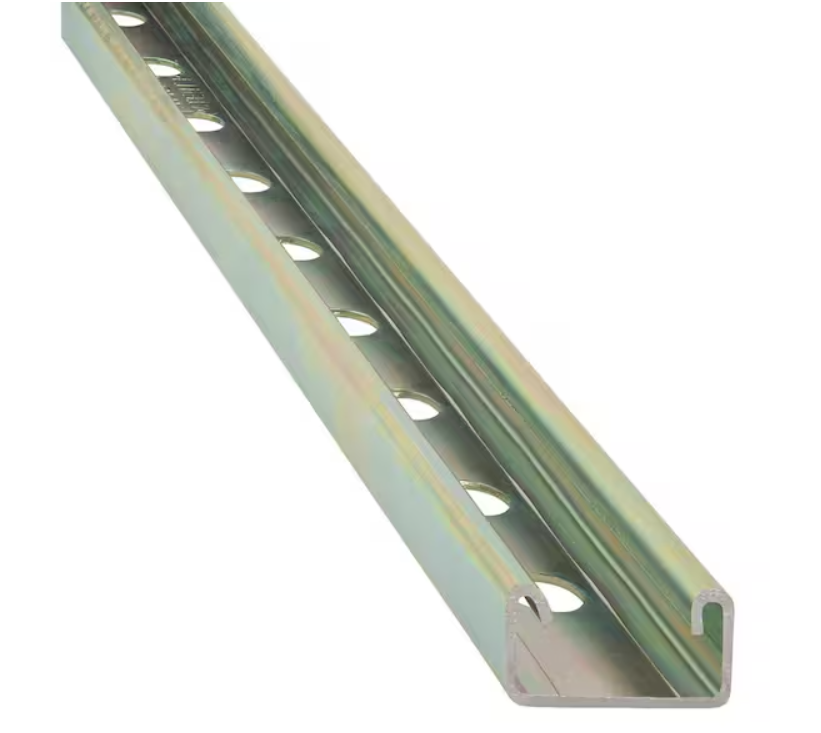
10 ft. 14-Gauge Metal Framing Strut Channel – Gold – Punched 9/16 in. Holes on 1-1/2 in. Centers (ZB 907 10)
- Designed so that the maximum number of support and framing applications can be constructed with a minimum amount of labor and pieces
- 1-1/2 in. dimension in the channel, hole spacing and fittings means all parts fit together, no matter where they are used or at what angle
Mastering the art of versatile construction with the industry’s most trusted channel framing solution
In the world of construction and engineering, where precision meets durability and functionality intersects with innovation, few components have achieved the legendary status of Kindorf channels. These seemingly simple yet extraordinarily versatile structural elements have become the backbone of countless projects, from industrial installations to commercial buildings, from electrical conduit systems to mechanical support frameworks.
The story of Kindorf channels is not just about metal fabrication—it’s about revolutionizing how engineers and contractors approach structural challenges. When you walk through any modern facility, from hospitals to manufacturing plants, from data centers to retail spaces, you’re likely surrounded by the invisible infrastructure that Kindorf channels provide. They’re the unsung heroes holding up everything from lighting fixtures to heavy machinery, creating the skeletal framework that keeps our built environment functioning seamlessly.
Understanding the Kindorf Channel: More Than Just Metal
At its core, a Kindorf channel represents engineering elegance in its purest form. These structural elements are essentially C-shaped steel channels with precisely engineered slots that allow for infinite adjustment and configuration possibilities. The genius lies not just in their robust construction, but in their modular nature that transforms rigid structural challenges into flexible, adaptable solutions.
Kindorf channels serve as the foundation for countless applications across multiple industries. Their primary function revolves around providing structural support for everything from electrical conduits and piping systems to heavy machinery and architectural elements. The channel’s distinctive slotted design allows for precise positioning of brackets, clamps, and other hardware components without the need for drilling or welding, making installations faster, more accurate, and infinitely more adaptable to changing requirements.
The versatility of Kindorf channels extends far beyond simple support functions. These channels create modular frameworks that can be easily reconfigured, expanded, or modified as project requirements evolve. In an era where flexibility and adaptability are paramount, this characteristic has made Kindorf channels indispensable in modern construction and industrial applications.
In electrical installations, Kindorf channels provide secure mounting platforms for conduit runs, junction boxes, and control panels. The precise slot spacing ensures consistent, professional-looking installations while maintaining full compliance with electrical codes and safety standards. Mechanical contractors rely on these channels for supporting HVAC systems, piping runs, and equipment mounting, appreciating how the standardized dimensions and load ratings simplify design calculations and installations.
The Installation Mastery: Transforming Complexity into Simplicity
Installing Kindorf channels represents a perfect blend of engineering precision and practical craftsmanship. The installation process, while straightforward in concept, requires understanding the nuances that separate professional-grade installations from amateur attempts.
The first critical step in any Kindorf channel installation involves comprehensive planning and layout. Professional installers begin by carefully measuring and marking mounting locations, ensuring proper alignment and spacing that will accommodate the intended loads and configurations. This planning phase proves crucial because the modular nature of Kindorf channels means that initial positioning decisions will impact every subsequent component installation.
Securing Kindorf channels to various surfaces requires different approaches depending on the substrate material and load requirements. For concrete installations, expansion anchors or chemical anchors provide the robust connection necessary for heavy-duty applications. Steel structure installations typically utilize welded mounting brackets or bolted connections that integrate seamlessly with existing structural elements. When mounting to masonry walls, specialized masonry anchors ensure reliable performance while minimizing potential damage to the substrate.
The beauty of Kindorf channel installation lies in the system’s forgiving nature. Unlike traditional mounting methods that require precise hole locations, the continuous slot design allows for adjustments during installation, accommodating field conditions that inevitably vary from original plans. This flexibility reduces installation time while improving final system performance and appearance.
Professional installers understand that proper Kindorf channel installation extends beyond simply securing the channels to walls or ceilings. The system’s modular nature means that careful consideration must be given to expansion joints, load distribution, and future modification requirements. Experienced contractors plan installations with growth and change in mind, positioning channels to accommodate future additions or reconfigurations without requiring major system overhauls.
Dimensional Precision: The Mathematics of Structural Excellence
The engineering excellence of Kindorf channels becomes apparent when examining their dimensional characteristics. These aren’t arbitrary measurements but carefully calculated specifications that balance structural performance with practical usability across diverse applications.
Standard Kindorf channels are manufactured in various depth configurations, with the most common sizes including 1-5/8 inch, 2-7/16 inch, and 3-1/4 inch depths. These dimensions aren’t coincidental—they represent optimal balance points between structural strength, material efficiency, and compatibility with standard hardware components. The channel width typically measures 1-5/8 inches, providing adequate surface area for mounting while maintaining compact overall dimensions.
The slot configuration represents perhaps the most critical dimensional aspect of Kindorf channels. Slots are precisely positioned at 1-1/4 inch centers along the channel length, creating a standardized grid system that ensures compatibility across manufacturers and applications. Each slot measures 9/16 inch in width and extends through the channel back, providing secure engagement for specialized nuts and hardware components.
Wall thickness specifications vary depending on the intended application and load requirements. Standard duty Kindorf channels typically feature 12-gauge steel construction, providing excellent strength-to-weight ratios for most applications. Heavy-duty variants utilize 10-gauge or even 8-gauge steel for applications requiring maximum structural performance. These thickness variations allow engineers to select the most appropriate channel specification for each specific application without over-engineering solutions.
The precision of Kindorf channel dimensions extends to tolerances that ensure consistent fit and finish across all system components. Manufacturing tolerances are held to extremely tight specifications, typically within ±0.005 inches for critical dimensions, ensuring that hardware components fit consistently regardless of channel source or manufacturing batch.
Material Science: Engineering Durability and Performance
The materials used in Kindorf channel construction represent a careful balance of structural performance, corrosion resistance, and manufacturing efficiency. Understanding these material characteristics proves essential for selecting the appropriate channel specification for each specific application environment.
Most Kindorf channels are manufactured from hot-rolled steel, chosen for its excellent strength characteristics and cost-effectiveness. The steel composition typically includes controlled amounts of carbon and manganese, creating material properties that provide high tensile strength while maintaining good formability for the channel manufacturing process. This steel composition ensures that Kindorf channels can withstand significant loads while maintaining dimensional stability under varying environmental conditions.
The manufacturing process for Kindorf channels involves precision roll-forming operations that create the characteristic C-shape while maintaining consistent dimensional accuracy. This cold-forming process actually enhances the steel’s strength characteristics through work hardening, resulting in channels that exceed the base material’s original strength specifications. The slot punching operation occurs during forming, ensuring precise slot placement and dimensions that meet stringent quality standards.
Kindorf channels are available in multiple material variants to accommodate specific environmental requirements. Standard carbon steel channels provide excellent performance for indoor applications where corrosion isn’t a primary concern. For more demanding environments, channels are available in stainless steel grades that offer superior corrosion resistance while maintaining full structural performance.
The material selection extends beyond just the base steel to include surface treatments and coatings that enhance performance and longevity. Standard Kindorf channels typically receive protective coatings that provide corrosion resistance appropriate for their intended applications, while specialized variants feature enhanced coating systems for extreme environmental conditions.
Corrosion Resistance: Protecting Infrastructure Investments
Corrosion resistance represents one of the most critical performance characteristics of Kindorf channels, particularly in applications where environmental conditions pose ongoing threats to steel infrastructure. Understanding the available corrosion protection options enables engineers and contractors to specify appropriate channel variants that will provide long-term performance in their specific application environments.
Standard Kindorf channels receive zinc plating or galvanized coatings that provide excellent corrosion protection for most indoor and mild outdoor applications. The zinc coating acts as a sacrificial layer that protects the underlying steel even if the coating becomes damaged through handling or installation. This galvanic protection continues to function as long as zinc remains in contact with the steel substrate, providing extended service life in corrosive environments.
For more demanding applications, Kindorf channels are available with enhanced coating systems including hot-dip galvanizing, which provides heavier zinc coatings for superior long-term protection. The hot-dip process creates a metallurgical bond between the zinc and steel that provides exceptional durability and corrosion resistance, making these channels suitable for outdoor installations and industrial environments with significant corrosion potential.
Stainless steel Kindorf channels represent the ultimate in corrosion resistance, utilizing alloy compositions that provide inherent corrosion protection without requiring additional coatings. These channels prove particularly valuable in food processing facilities, chemical plants, and marine environments where standard steel channels would suffer rapid degradation.
The effectiveness of corrosion protection systems in Kindorf channels depends not only on the coating or material selection but also on proper installation and maintenance practices. Professional installers understand the importance of protecting cut ends and damaged areas with appropriate touch-up coatings to maintain system integrity throughout the channel’s service life.
Load Capacity Engineering: Understanding Structural Performance
The load capacity characteristics of Kindorf channels represent sophisticated engineering calculations that account for multiple failure modes and loading conditions. Understanding these capacity ratings enables engineers to design safe, efficient structural systems that fully utilize the channels’ capabilities without compromising safety margins.
Kindorf channels are engineered to handle multiple types of loading conditions, including uniform distributed loads, concentrated point loads, and various combinations of vertical and lateral forces. The channel’s C-shaped cross-section provides excellent resistance to bending moments while the continuous slot pattern maintains structural integrity without creating stress concentration points that could lead to premature failure.
Load capacity ratings for Kindorf channels vary based on channel size, span length, and support conditions. A standard 1-5/8 inch deep channel can typically support uniform loads ranging from several hundred pounds for long spans to several thousand pounds for shorter, well-supported installations. These ratings assume proper installation with adequate anchorage and consideration for dynamic loading factors that may occur during service.
The engineering analysis behind Kindorf channel load ratings considers multiple failure modes including flexural stress, deflection limits, local buckling, and connection capacity. Professional engineers understand that the weakest link in any structural system often occurs at connections rather than in the primary structural members, making proper hardware selection and installation critical for achieving rated performance.
Safety factors incorporated into Kindorf channel load ratings provide appropriate margins for variations in loading, installation quality, and material properties. These factors ensure reliable performance even under conditions that may vary from ideal design assumptions, providing the reliability that has made Kindorf channels trusted components in critical infrastructure applications.
Comparative Analysis: Kindorf Channels versus Unistrut Systems
The comparison between Kindorf channels and Unistrut systems represents more than simple brand preference—it involves understanding fundamental differences in design philosophy, manufacturing standards, and performance characteristics that can significantly impact project success.
Kindorf channels and Unistrut systems share similar functional concepts, both providing slotted channel solutions for modular structural applications. However, the detailed specifications and performance characteristics reveal important differences that influence selection decisions for specific applications. Understanding these differences enables engineers and contractors to make informed decisions based on project requirements rather than simple familiarity or availability.
Dimensional compatibility represents one of the most critical comparison factors between Kindorf channels and Unistrut systems. While both systems utilize similar slot spacing and hardware concepts, subtle differences in channel dimensions and slot configurations can impact hardware interchangeability. Professional installers understand the importance of maintaining consistency within channel systems to ensure proper fit and performance of all components.
The manufacturing standards and quality control processes for Kindorf channels reflect the company’s commitment to precision and consistency. These standards ensure that channels maintain consistent dimensions and performance characteristics across manufacturing batches and time periods, providing the reliability that professional contractors require for complex installations.
Load rating methodologies and testing standards may vary between Kindorf channels and competing systems, making direct performance comparisons more complex than simple load table comparisons. Professional engineers understand the importance of evaluating the engineering basis behind published load ratings rather than simply comparing numerical values without understanding the underlying assumptions and safety factors.
Channel Type Variations: Specialized Solutions for Diverse Applications
The family of Kindorf channels encompasses multiple specialized variants designed to address specific application requirements and performance demands. Understanding these variations enables engineers and contractors to select the most appropriate channel type for each unique application challenge.
Standard slotted Kindorf channels represent the most common variant, featuring the traditional C-shaped cross-section with continuous slot patterns along the channel back. These channels provide maximum versatility for general-purpose applications where hardware positioning flexibility is paramount. The continuous slot pattern allows infinite adjustment of component positions while maintaining full structural performance.
Solid back Kindorf channels eliminate the slot pattern in favor of a continuous, unperforated back surface. This variant provides enhanced structural performance for applications where maximum load capacity is required and hardware positioning flexibility can be sacrificed for increased strength. Solid channels also provide better resistance to environmental infiltration in outdoor applications.
Half-slot Kindorf channels feature slot patterns on alternating sections, providing partial hardware positioning flexibility while maintaining enhanced structural characteristics compared to fully slotted variants. This design proves particularly useful in applications where some hardware positioning adjustment is needed but maximum structural performance remains a priority.
Heavy-duty Kindorf channels utilize thicker steel construction and enhanced manufacturing processes to provide maximum load capacity for demanding structural applications. These channels maintain the same dimensional compatibility with standard hardware while providing significantly increased structural performance for heavy equipment mounting and high-load applications.
Specialized Kindorf channels are available for unique applications including fire-rated assemblies, seismic installations, and food-grade environments. These variants incorporate specific material compositions, coatings, or manufacturing processes that address particular regulatory requirements or performance demands.
Outdoor Applications: Weather Resistance and Environmental Performance
The use of Kindorf channels in outdoor applications requires careful consideration of environmental factors that can impact long-term performance and system reliability. Understanding these considerations enables engineers to design outdoor installations that provide reliable service throughout their intended design life.
Outdoor Kindorf channel installations must address multiple environmental challenges including temperature variations, moisture exposure, UV radiation, and potential chemical exposure from pollution or industrial processes. The channel material selection and protective coating systems must provide adequate resistance to these environmental factors while maintaining full structural performance.
Temperature cycling represents one of the most significant environmental challenges for outdoor Kindorf channel installations. Daily and seasonal temperature variations cause thermal expansion and contraction that can create stress concentrations at connection points and anchorage locations. Professional installers account for these movements through proper expansion joint design and flexible connection details that accommodate thermal movement without compromising structural integrity.
Moisture management proves critical for long-term outdoor Kindorf channel performance. Even with excellent corrosion-resistant coatings, proper drainage design prevents water accumulation that could lead to accelerated corrosion or freeze-thaw damage. Installation details must ensure that water can drain freely from channel sections and that connection points don’t create moisture traps.
UV exposure considerations apply not only to any polymer components in the installation but also to protective coatings on the Kindorf channels themselves. Some coating systems can degrade under prolonged UV exposure, potentially compromising corrosion protection. Selecting appropriate coating systems for the specific UV exposure conditions ensures long-term protection.
Cutting and Modification Techniques: Precision Field Adaptation
The ability to cut and modify Kindorf channels in the field represents one of their most valuable characteristics, allowing installers to adapt standardized components to specific project requirements. However, proper cutting techniques and post-cutting treatments are essential for maintaining structural performance and corrosion protection.
Cutting Kindorf channels requires appropriate tools and techniques that produce clean, precise cuts without damaging the channel structure or compromising dimensional accuracy. Professional installers typically utilize metal-cutting saws with appropriate blade selections that minimize burr formation and heat generation during cutting. Abrasive cutting wheels can also produce acceptable results but require careful technique to prevent overheating that could affect the steel’s metallurgical properties.
The precision of Kindorf channel cuts directly impacts the quality and appearance of the finished installation. Clean, square cuts ensure proper fit of end caps, splices, and connection hardware while maintaining the professional appearance that clients expect. Poor cutting techniques can result in dimensional variations that compromise hardware fit and create unsightly gaps or misalignments.
Post-cutting treatment of Kindorf channels proves critical for maintaining corrosion protection and structural performance. Cut ends expose unprotected steel that requires appropriate protective treatment to prevent corrosion initiation. Touch-up coatings specifically designed for field application provide adequate protection when properly applied according to manufacturer specifications.
Safety considerations during Kindorf channel cutting operations include proper personal protective equipment, adequate ventilation when using power tools, and secure clamping of workpieces to prevent movement during cutting. Professional installers understand that safe cutting practices not only protect workers but also contribute to better cut quality and overall installation success.
Hardware Compatibility: Building Complete Structural Systems
The extensive ecosystem of compatible hardware components represents one of the greatest advantages of Kindorf channel systems. Understanding the available hardware options and their proper application enables engineers and installers to create complete structural solutions that fully utilize the system’s modular capabilities.
Channel nuts represent the fundamental hardware component that enables the modular nature of Kindorf channel systems. These specialized nuts are designed to slide within the channel slots and rotate to lock in position, providing secure anchor points for bolts and threaded rods. The precision manufacturing of channel nuts ensures consistent engagement with channel slots while providing reliable load transfer characteristics.
Brackets and clamps designed for Kindorf channels provide standardized solutions for common mounting and support applications. These components are engineered to work specifically with the channel slot pattern and dimensions, ensuring proper fit and optimal load transfer. The extensive range of available brackets addresses applications from simple conduit supports to complex equipment mounting assemblies.
Beam clamps and structural connections enable Kindorf channels to be integrated with existing building structures and other structural elements. These specialized hardware components provide engineered connection solutions that maintain the system’s load capacity while accommodating the geometric constraints of real-world installations.
End caps and closure components provide finishing touches that protect channel interiors from debris infiltration while maintaining the professional appearance that clients expect. These seemingly minor components contribute significantly to system longevity by preventing moisture and debris accumulation that could lead to performance degradation.
Regulatory Compliance: Meeting Industry Standards
Compliance with relevant industry standards and regulatory requirements represents a critical aspect of Kindorf channel system specification and installation. Understanding these requirements ensures that installations meet safety standards while providing documentation necessary for code compliance and inspection approval.
Kindorf channels are manufactured to meet or exceed relevant industry standards including NEMA, UL, and other applicable specifications. This compliance ensures that the channels provide consistent performance characteristics that engineers can rely upon in their design calculations. The standardized testing and certification processes provide independent verification of channel performance claims.
UL listing for Kindorf channels and compatible hardware components provides assurance that these products meet rigorous safety standards for electrical applications. This listing proves particularly important for installations involving electrical conduit supports and control panel mounting where code compliance is strictly enforced.
Seismic compliance represents an increasingly important consideration for Kindorf channel installations, particularly in earthquake-prone regions where building codes mandate specific seismic resistance requirements. Specialized hardware and installation details are available to address these requirements while maintaining the system’s modular advantages.
Fire rating considerations may apply to Kindorf channel installations in certain occupancies where structural components must maintain their integrity during fire conditions. Understanding these requirements and the available compliance solutions ensures that installations meet code requirements without compromising system performance or installation efficiency.
Standard Lengths and Customization Options
The availability of Kindorf channels in standard lengths combined with customization options provides flexibility for addressing diverse project requirements while maintaining manufacturing efficiency and cost-effectiveness. Understanding these options enables optimal material specification that minimizes waste while meeting project needs.
Standard Kindorf channel lengths are manufactured in common sizes including 10-foot and 20-foot lengths, providing convenient sizes for most installation applications. These standard lengths are readily available from distributors and provide cost-effective solutions for typical project requirements. The standardization also simplifies material handling and transportation logistics.
Custom length Kindorf channels can be manufactured to specific project requirements, eliminating the waste and labor associated with field cutting of standard lengths. This customization proves particularly valuable for large projects where material optimization can provide significant cost savings. However, custom lengths typically require longer lead times and minimum order quantities.
The decision between standard and custom lengths involves balancing material costs, labor expenses, and project scheduling considerations. Professional contractors understand that the lowest material cost doesn’t always result in the lowest installed cost when installation labor and waste disposal expenses are considered.
Pre-punched and pre-fabricated Kindorf channels represent another customization option that can reduce field labor while ensuring precise fabrication quality. These services are particularly valuable for complex installations where field fabrication quality could impact system performance or where tight project schedules demand maximum installation efficiency.
Application Diversity: Real-World Implementation Success
The versatility of Kindorf channels becomes apparent when examining their implementation across diverse industries and applications. From high-tech data centers to heavy industrial facilities, these channels provide structural solutions that address unique challenges while maintaining consistent performance standards.
In data center applications, Kindorf channels provide the precision mounting systems required for server racks, cable management systems, and HVAC equipment. The clean, professional appearance combined with easy reconfiguration capabilities makes these channels ideal for environments where technology changes frequently and aesthetic considerations remain important.
Healthcare facilities rely on Kindorf channels for supporting everything from medical gas piping to imaging equipment mounting. The corrosion resistance and easy cleaning characteristics of properly finished channels meet the stringent hygiene requirements of medical environments while providing the structural performance necessary for critical equipment support.
Manufacturing facilities utilize Kindorf channels for equipment mounting, conveyor supports, and utility distribution systems. The robust construction and load capacity characteristics make these channels suitable for industrial environments where heavy equipment and dynamic loading conditions are common.
Educational and institutional buildings benefit from the versatility and reconfiguration capabilities of Kindorf channels for laboratory equipment, utility distribution, and specialized mounting applications. The ability to modify and expand installations without major disruption proves particularly valuable in occupied buildings.
Surface Finishes: Protection and Aesthetics
The range of available surface finishes for Kindorf channels addresses both functional protection requirements and aesthetic considerations that contribute to professional-quality installations. Understanding finish options enables specification of channels that provide optimal performance while meeting project appearance standards.
Standard galvanized finishes provide excellent corrosion protection combined with cost-effectiveness for most applications. The zinc coating provides sacrificial protection that extends channel service life while maintaining acceptable appearance for utility and industrial applications. This finish represents the standard specification for most Kindorf channel applications.
Powder-coated finishes offer enhanced appearance characteristics combined with excellent durability and corrosion resistance. These finishes are available in a wide range of colors and textures, enabling channels to blend with architectural elements or provide visual coding for different utility systems. The powder coating process provides uniform coverage and excellent adhesion characteristics.
Stainless steel Kindorf channels provide inherent corrosion resistance without requiring additional protective coatings. These channels maintain their appearance throughout their service life and provide the ultimate in corrosion resistance for demanding environments. The natural finish of stainless steel provides a clean, professional appearance suitable for architectural applications.
Specialized finishes are available for unique applications including food-grade environments, clean rooms, and marine installations. These finishes are engineered to meet specific performance requirements while providing appropriate protection for their intended service environments.
Installation Guides and Professional Practices
Professional installation of Kindorf channels relies on understanding established practices and following manufacturer guidelines that ensure optimal system performance and longevity. Access to comprehensive installation guides and technical support enables installers to achieve professional results consistently.
Pre-installation planning represents the foundation of successful Kindorf channel installations. Professional installers begin with careful review of project drawings and specifications, identifying potential challenges and developing installation sequences that optimize efficiency while ensuring quality results. This planning phase prevents costly field problems and ensures adequate material availability.
Layout and measurement procedures require precision that reflects the modular nature of Kindorf channel systems. Accurate initial positioning ensures that all subsequent components align properly while maintaining the geometric relationships necessary for optimal system performance. Professional installers understand that small errors in initial layout multiply throughout the installation process.
Quality control during installation involves systematic verification of anchor installation, channel alignment, and hardware engagement. These checkpoints ensure that each installation phase meets specifications before subsequent work proceeds, preventing problems that could require costly remediation.
Documentation of completed installations provides valuable records for future maintenance and modification activities. Professional installations include as-built drawings and component specifications that enable future work to proceed efficiently while maintaining system integrity and performance.
The Future of Structural Framing Excellence
As we look toward the future of construction and infrastructure development, Kindorf channels continue to evolve while maintaining the fundamental characteristics that have made them indispensable in modern construction. The combination of structural performance, installation flexibility, and system reliability positions these channels as essential components in the infrastructure that supports our increasingly complex built environment.
The enduring success of Kindorf channels stems from their ability to transform complex structural challenges into manageable, modular solutions. Whether supporting critical infrastructure in hospitals, enabling rapid reconfiguration in manufacturing facilities, or providing the invisible framework that keeps our daily environments functioning, these channels represent engineering excellence that serves as the foundation for countless successful projects.
Understanding Kindorf channels means appreciating not just their technical specifications and installation procedures, but recognizing their role in enabling the infrastructure that supports modern society. From the electrical systems that power our buildings to the mechanical systems that maintain comfortable environments, Kindorf channels provide the structural foundation that makes complex building systems possible while maintaining the flexibility necessary for ongoing adaptation and improvement.
The investment in quality Kindorf channel systems pays dividends throughout the life of any facility, providing reliable performance, easy maintenance access, and adaptation capability that keeps pace with changing needs and technologies. This long-term value proposition, combined with the immediate benefits of faster installation and superior performance, ensures that Kindorf channels will continue serving as essential components in the infrastructure that shapes our built environment for generations to come.